
Table of Contents
- What Makes a Makeup Brand Safe for Sensitive Skin?
- Non-Toxic Makeup Ingredients to Avoid
- Quick Comparison: LUV + CO. Sensitive Skin Line
- Best Foundation and Concealer for Reactive Skin
- Gentle Eye Makeup for Sensitive Eyes
- Clean Beauty for Melanated Sensitive Skin
- How to Patch Test Makeup for Sensitive Skin
- Final Verdict: Choosing Your Safe Makeup Routine
- Frequently Asked Questions
Last Updated: September 6, 2026
Finding truly safe makeup brands for sensitive skin often feels like a game of trial and error, where the price of losing is redness, breakouts, or a stinging sensation that lingers for hours. The challenge is compounded for melanated skin, where many mainstream "clean" lines fail to provide accurate shades or use ingredients that trigger hyperpigmentation. In this guide from LUV + CO., we break down what makes a formula safe, which ingredients to avoid, and how to build a routine that protects your skin barrier while delivering flawless coverage.
A brand is only "safe" for you if its specific ingredients align with your unique sensitivities. Rather than falling for marketing labels like "hypoallergenic" which have no strict regulatory definition, we focus on the science of formulation. Below, we'll show you how to decode ingredient lists, map your personal triggers, and choose products that support reactive, acne-prone, and hyperpigmentation-prone skin without compromise.
What Makes a Makeup Brand Safe for Sensitive Skin?
A makeup brand is safe for sensitive skin when its formulas are built around a short list of non-irritating, non-comedogenic ingredients and are free from known triggers like synthetic dyes and heavy fragrances. This means prioritizing products that are fragrance-free, paraben-free, and talc-free, while using mineral-based pigments like zinc oxide and titanium dioxide that sit gently on the skin rather than seeping into pores.
The formulation philosophy matters as much as the ingredient list. For those with a compromised skin barrier, makeup should ideally double as skincare, delivering soothing ingredients like ceramides, hyaluronic acid, and botanical extracts such as green tea and chamomile. At LUV + CO., our products are created by a beauty product development PhD and are designed to cover concerns like hyperpigmentation and acne without causing irritation.
Non-Toxic Makeup Ingredients to Avoid
Understanding which ingredients trigger your skin is the first step to building a safe makeup routine. Rather than a one-size-fits-all avoid list, the most effective approach is to map your past reaction symptoms to specific chemical triggers.
How to Identify Your Personal Triggers
When you experience a reaction, whether it's immediate stinging, delayed redness, or breakouts, note the symptom and the product you used. Then cross-reference the product's ingredient list against the categories below. Over time, you'll build a personalized "avoid list" that is far more reliable than any generic label.
| Symptom You Experienced | Likely Culprit Category | Example Ingredients | What to Look For Instead |
|---|---|---|---|
| Immediate stinging or burning | Acids and low-pH exfoliants | Glycolic acid, salicylic acid, citric acid | pH-balanced, non-acidic formulas |
| Redness and itching within hours | Fragrance and essential oils | Limonene, linalool, geraniol | Fragrance-free or labeled "no essential oils" |
| Delayed breakouts or whiteheads | Pore-clogging emollients | Isopropyl myristate, acetylated lanolin | Non-comedogenic oils like jojoba or squalane |
| Swelling or hives | Preservatives | Methylisothiazolinone, formaldehyde releasers | Preservative systems like phenoxyethanol or ethylhexylglycerin |
| Dry, flaky patches | Drying alcohols and sulfates | SD alcohol, sodium lauryl sulfate | Alcohol-free, sulfate-free formulas |
The Problem with "Fragrance" on Labels
Under U.S. law, the term "fragrance" on an ingredient list can represent dozens of undisclosed chemicals, many of which are common contact allergens (the FDA). The FDA does not require brands to disclose individual fragrance components, so a product labeled simply "fragrance" is a potential trigger. Look for products that specify "fragrance-free" (not just "unscented," which may still contain masking fragrances) or that list every component.
Why "Hypoallergenic" Is Not a Guarantee
The FDA has no formal definition for the term "hypoallergenic" on cosmetics (the FDA). A product can claim to be hypoallergenic even if it contains known allergens. Instead of relying on marketing claims, train yourself to read the full ingredient list and recognize the categories above. This is especially important for melanated skin, where certain ingredients can trigger post-inflammatory hyperpigmentation that lingers long after the initial reaction fades.
Cross-Reactivity and Cumulative Exposure
Some ingredients are chemically similar, so if you react to one, you may also react to others. For example, if you're allergic to balsam of Peru, you may also react to synthetic vanilla or cinnamon derivatives. Similarly, if you react to one essential oil, you may be sensitive to others in the same botanical family. Keep a log of your reactions and note any patterns, this can help you predict future triggers before they cause a flare-up.
By shifting from a generic "avoid these" list to a personalized reaction-mapping approach, you can make safer choices even when trying new brands. This is the level of detail that most "best of" lists miss, but it's essential for anyone with reactive skin.
Quick Comparison: LUV + CO. Sensitive Skin Line
When you have sensitive skin, price doesn't always equal safety. Many drugstore brands now formulate with the same dermatologist-recommended ingredients as luxury lines, but at a fraction of the cost. The key is knowing what to look for, and what you can skip.
What You're Paying For (and What You're Not)
In the U.S. market, a $10 foundation and a $50 foundation can share the same core safety profile: fragrance-free, non-comedogenic, and mineral-based pigments. The price difference often comes down to packaging, marketing, and additional skincare actives, not necessarily safety. However, luxury brands may invest more in clinical testing and offer more nuanced shade ranges, which is critical for melanated skin.
Drugstore Alternatives That Meet Safety Standards
Several drugstore brands have earned the National Eczema Association Seal of Acceptance, which means their formulas are free from common irritants and allergens (nationaleczema.org). For example, Neutrogena's Hydro Boost Hydrating Tint is fragrance-free, non-comedogenic, and contains hyaluronic acid, a hydrating ingredient that supports the skin barrier. Maybelline's Fit Me Dewy + Smooth Foundation is also fragrance-free and non-comedogenic, though it does contain alcohol, which may be drying for some.
When shopping drugstore, look for these safety markers:
- Fragrance-free (not "unscented")
- Non-comedogenic (won't clog pores)
- Mineral-based pigments (iron oxides, titanium dioxide)
- No essential oils (even "natural" ones can irritate)
When Luxury Is Worth the Splurge
Luxury brands often offer more sophisticated shade matching, especially for deep skin tones. For example, Fenty Beauty's Pro Filt'r Soft Matte Longwear Foundation is fragrance-free, non-comedogenic, and offers 50 shades with undertones specifically designed for melanated skin. NARS Natural Radiant Longwear Foundation is also fragrance-free and provides a wide shade range, but it contains alcohol, which may be a trigger for some.
How LUV + CO. Fits In
LUV + CO. sits at the intersection of clinical safety and shade inclusivity. Our formulas are developed by a beauty product development PhD and are fragrance-free, non-comedogenic, and free from common irritants. We also understand that price matters, which is why we offer mini collections that let you test shades and formulas before committing to a full-size product.
| Product | Price | Key Feature | Best For |
|---|---|---|---|
| Melanin Match Liquid Foundation | $44.00 | Hydrating, 16 shades | Everyday medium coverage |
| HD Cream Foundation + Concealer | $49.00 | Concentrated, full coverage | Hyperpigmentation & spots |
| Chamomile Face & Eye Primer | $36.00 | Soothing, multi-use | Prep & longer wear |
| Melanin Magic Setting Powder | $49.00 | Deep tinted, no ash | Setting makeup on deep skin |
The Bottom Line on Budget vs. Luxury
For most people with sensitive skin, a drugstore foundation that is fragrance-free and non-comedogenic will perform just as well as a luxury one, provided the shade matches. The extra cost often goes toward packaging and marketing, not safety. However, if you have specific concerns like hyperpigmentation or very deep skin tone, investing in a brand that offers a wider shade range and undertone analysis may be worth it. LUV + CO. was created to fill that gap for melanated skin, but we also encourage you to explore all options that meet your personal safety criteria.

Best Foundation and Concealer for Reactive Skin
The best foundation for reactive skin provides buildable coverage that minimizes the look of hyperpigmentation without settling into fine lines or feeling cakey. A dual-purpose cream formula is often the smartest investment, as it allows you to spot-conceal dark spots and under-eye discoloration while using a lighter layer elsewhere.
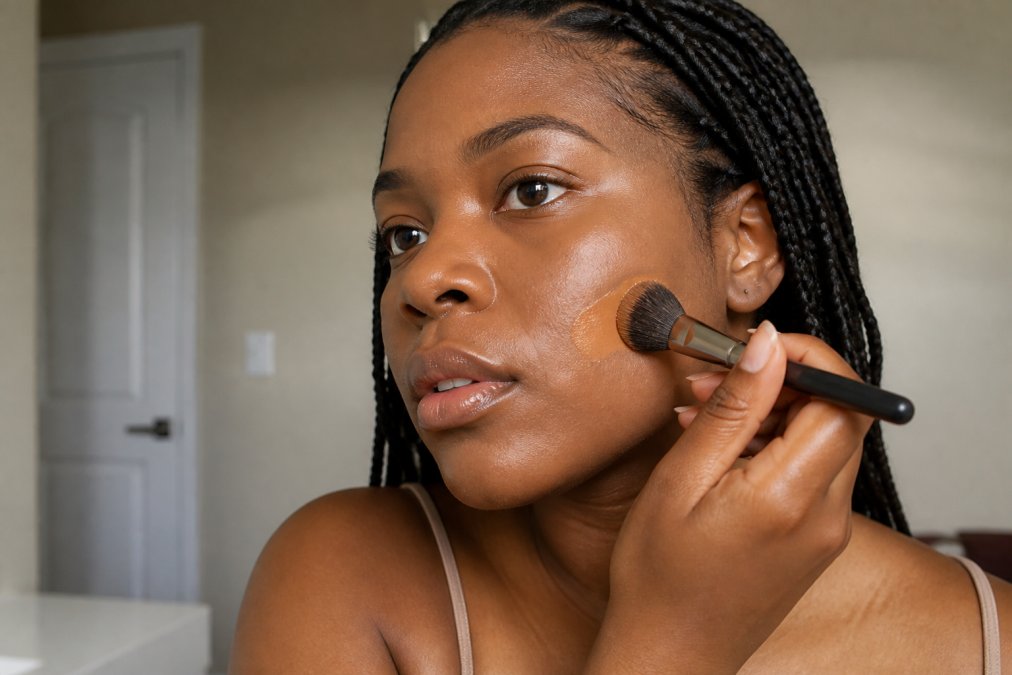
For acne-prone and sensitive skin, the texture of your base matters. The Melanin Match HD Cream Foundation + Concealer is an oil-free, mineral-pigment cream that blends to a natural matte finish, helping to camouflage bruising and uneven tone without clogging pores. If you prefer a lighter feel, the Liquid Foundation offers medium, buildable coverage with a natural matte finish that never looks dry.
Gentle Eye Makeup for Sensitive Eyes
Eye makeup for sensitive eyes requires formulas that are free from fragrance, synthetic dyes, and heavy waxes that can migrate and cause irritation. The skin around your eyes is thinner and more reactive, so choosing products with a short, botanical-based ingredient list is critical for preventing redness and stinging.
Our approach at LUV + CO. is to formulate eye products that are as gentle as they are effective. The Natural Lift Mascara is a formula designed to resist smudging and clumping while lifting short lashes. For definition, The LUV Liner offers a 99% natural, vegan pencil that glides on smoothly, while the Single Ladies Pressed Eyeshadow provides color without added fragrance or artificial colors.

Clean Beauty for Melanated Sensitive Skin
Clean beauty for melanated sensitive skin goes beyond avoiding toxins; it requires shades and undertones that genuinely match deeper complexions without oxidizing or leaving an ashy residue. Historically, many "clean" brands have failed Black women by offering limited shade ranges or using color analysis methods that are inappropriate for darker skin tones.
This is why LUV + CO. developed a proprietary shade matching system powered by Melanin Analysis. For those who cannot visit the studio, the Non-Toxic Moisturizing Lipstick uses a high pigment ratio to show up vividly on naturally pigmented lips, and the Melanin Magic Tinted Translucent Setting Powder is designed to set makeup on medium to deep skin without the chalky cast of traditional translucent powders.

How to Patch Test Makeup for Sensitive Skin
Patch testing is the most reliable way to determine if a new makeup product will irritate your skin before you apply it to your entire face. This process takes about a week but can save you from a painful flare-up that takes much longer to heal.
- Choose Your Spot: Apply a small amount of the product to a discreet area, such as behind your ear or on your inner forearm.
- Wait and Observe: Leave it on for 24 hours without washing. If you experience redness, itching, or swelling, wash it off immediately.
- Repeat Daily: If no reaction occurs, reapply to the same spot for 5 to 7 days. Many allergic reactions are delayed, appearing after repeated exposure.
- Check Your Skin Barrier: If the test area remains clear, apply the product to a small area of your jawline for two more days before using it all over your face.
Final Verdict: Choosing Your Safe Makeup Routine
Choosing the right safe makeup brands for sensitive skin is a process of elimination, not a one-size-fits-all purchase. Start by identifying your specific triggers from the ingredient list, then look for products that offer mineral pigments, soothing botanicals, and a shade range that respects your undertone. This approach ensures your makeup enhances your skin rather than compromising it.
The challenge of finding makeup that covers hyperpigmentation without irritation, matches your deep skin tone accurately, and hydrates without clogging pores is real. LUV + CO. solves this by combining the expertise of a beauty product development PhD with a genuine understanding of melanated skin. Our certified non-toxic, vegan, and cruelty-free products are formulated to provide natural-looking coverage without a gray cast, and our mini collections allow you to test shades safely at home.
Get started with LUV + CO. and find your shade with confidence, knowing your skin health is never sacrificed for beauty.
Frequently Asked Questions
Which makeup brand is best for very sensitive skin?
The best safe makeup brands for sensitive skin focus on short ingredient lists, mineral pigments, and skip known irritants like fragrance and synthetic dyes. LUV + CO. formulates specifically for melanated sensitive skin, using soothing ingredients like chamomile and jojoba oil. Their Melanin Match Liquid Foundation is talc-free, offering medium buildable coverage without pore-clogging fillers. Always review the full ingredient list and patch test before committing to a full-size product.
What makeup do dermatologists recommend for sensitive skin?
Dermatologists typically recommend makeup that is non-comedogenic, fragrance-free, and hypoallergenic. They often point to mineral-based formulas with zinc oxide or titanium dioxide, which sit on the skin rather than sinking in and triggering reactions. Look for products that are paraben-free and phthalate-free. For melanated skin, the key addition is a formula that avoids a gray cast.
How can I tell if a makeup product is safe for my sensitive skin?
Start by scanning the ingredient list for the most common triggers: synthetic dyes, formaldehyde-releasers, and added fragrance. Then check for clinical trials or dermatologist-testing claims. Before applying to your face, do a patch test on your inner arm or behind your ear for 24 to 48 hours. If you have reactive skin, choose products labeled non-comedogenic and fragrance-free. LUV + CO. publishes full ingredient lists for every product so you can verify what you are putting on your skin.
Are mineral makeup brands better for sensitive skin?
Mineral makeup is often a strong choice for sensitive skin because it relies on ingredients like zinc oxide, titanium dioxide, and iron oxides, which are less likely to cause contact dermatitis than synthetic dyes and preservatives. The absence of talc, parabens, and fragrance also reduces irritation risk. However, not all mineral formulas are equal. LUV + CO. takes it further by developing shades specifically for melanated skin, so you get the gentle mineral benefits without the chalky or ashy finish many deeper skin tones experience with traditional mineral lines.