

Table of Contents
- What Causes Facial Hyperpigmentation on Melanated Skin
- Natural Ingredients for Hyperpigmentation That Have Real Evidence
- How to Fade Dark Spots on Black Skin Without Irritation
- How Long Does It Take to Treat Hyperpigmentation
- Sun Protection and Lifestyle Habits That Worsen Hyperpigmentation
- Common Mistakes and Ingredients to Avoid
- Frequently Asked Questions
Last Updated: September 13, 2026
What Causes Facial Hyperpigmentation on Melanated Skin
Facial hyperpigmentation is the darkening of patches of skin caused by excess melanin production, and on melanated skin it develops through a distinct set of triggers. This guide from LUV + CO. walks through the natural ways to treat facial hyperpigmentation that hold up in practice, and the ones that quietly make dark spots worse.
Melanin is your skin's built-in defense system. When it overreacts, you get dark spots. The question is why it overreacts, and the answer shapes everything about how you treat it.
According to the American Academy of Dermatology's guidance on pigmentation disorders, darker skin tones are more prone to uneven pigmentation after any kind of inflammation or injury. That single fact explains most of what you're seeing in the mirror.
Post-Inflammatory Hyperpigmentation and Melasma
Post-inflammatory hyperpigmentation (PIH) is discoloration that appears after the skin experiences inflammation, such as an acne breakout, an insect bite, or a harsh reaction to a product.
Melasma is a separate condition involving larger, symmetrical patches of discoloration, often on the cheeks, forehead, and upper lip, frequently triggered by hormonal shifts and UV exposure.
The two get confused constantly. PIH usually follows a visible injury to the skin. Melasma shows up without one. Both respond to similar natural ingredients, but melasma tends to need longer treatment and stricter sun protection.
A common mistake is treating melasma like a handful of acne scars. They need different patience levels.
Natural Ingredients for Hyperpigmentation That Have Real Evidence
A short list of plant-based ingredients has meaningful support for fading discoloration: licorice extract, green tea, aloe vera, niacinamide, and lactic acid. Each works through a different mechanism, which is why combining them beats relying on one. But the same ingredient that calms one face can inflame another, so the real skill is matching the ingredient to your skin type, something most generic guides skip entirely.
Licorice extract contains glabridin, a compound that interferes with the tyrosinase enzyme, the catalyst your skin uses to produce melanin. Interrupt that step and you slow new pigment from forming. Green tea brings antioxidants that calm the inflammation driving pigment overproduction in the first place.
Aloe vera does double duty: it soothes irritation and supplies a mild natural brightening effect. Lactic acid, found in milk, gently exfoliates to speed up skin cell turnover, which helps existing pigment shed faster.
| Ingredient | How It Works | Best For | Watch Out For |
|---|---|---|---|
| Licorice extract | Slows tyrosinase enzyme activity | Preventing new dark spots | Can dry oily skin at high concentrations |
| Green tea | Calms inflammation, supplies antioxidants | Reactive, easily irritated skin | Rare caffeine sensitivity in leave-on products |
| Aloe vera | Soothes and mildly brightens | Sensitive skin, daily use | Some people react to aloin in raw gel |
| Lactic acid | Exfoliates, speeds cell turnover | Fading existing spots | Overuse strips dry and sensitive skin |
| Niacinamide | Supports the skin barrier, evens tone | Maintenance and prevention | Tingling at very high percentages |
Matching the Ingredient to Your Skin Type
Oily and acne-prone skin. Lactic acid and niacinamide are your workhorses. Lactic acid is the gentlest of the alpha-hydroxy acids, so it clears the pore-clogging debris that feeds post-inflammatory hyperpigmentation without the sting of glycolic acid. Start with a leave-on treatment two or three nights a week, and keep a green tea toner on hand for daytime inflammation control.
Dry skin. Skip daily acid exfoliation and lean on aloe vera, licorice, and niacinamide. Dry skin already has a compromised barrier, and a compromised barrier produces more pigment, not less. Layer a licorice serum under a ceramide-rich moisturizer, and use lactic acid no more than once a week.
Sensitive and reactive skin. Green tea and aloe vera are the safest starting points because they calm rather than resurface. Introduce licorice only after two weeks of tolerance, and patch test every new product on your jawline, not just your forearm.
Combination skin. Treat zones separately. A niacinamide serum works across the whole face, but you can spot-treat the oily T-zone with lactic acid while leaving the drier cheeks to aloe and licorice alone.
Sourcing Matters More Than You Think
What you put on your face is only as clean as what was sprayed on the plant. Conventional aloe, green tea, and licorice crops can carry pesticide residues, and your facial skin absorbs them. Look for cold-pressed or organic aloe vera gel, and choose green tea and licorice extracts from brands that publish their sourcing. A short ingredient list from a transparent formulator beats a long one from a company that won't say where its botanicals come from.
How to Patch Test Before You Commit
Patch testing is non-negotiable on melanated skin. Apply a small amount of the product behind your ear or on your inner forearm. Wait 24 to 48 hours. If you see redness, itching, or new darkening, stop.
The thing nobody tells you about patch testing: your face is more reactive than your arm. A product that passes on your forearm can still irritate your cheeks. Test on a small patch of jawline before applying anything full-face.
How to Fade Dark Spots on Black Skin Without Irritation
Fading dark spots on Black skin comes down to two rules: never irritate the skin, and never skip sunscreen. Aggressive scrubbing and strong acids backfire because inflammation triggers more melanin production, the exact opposite of what you want.
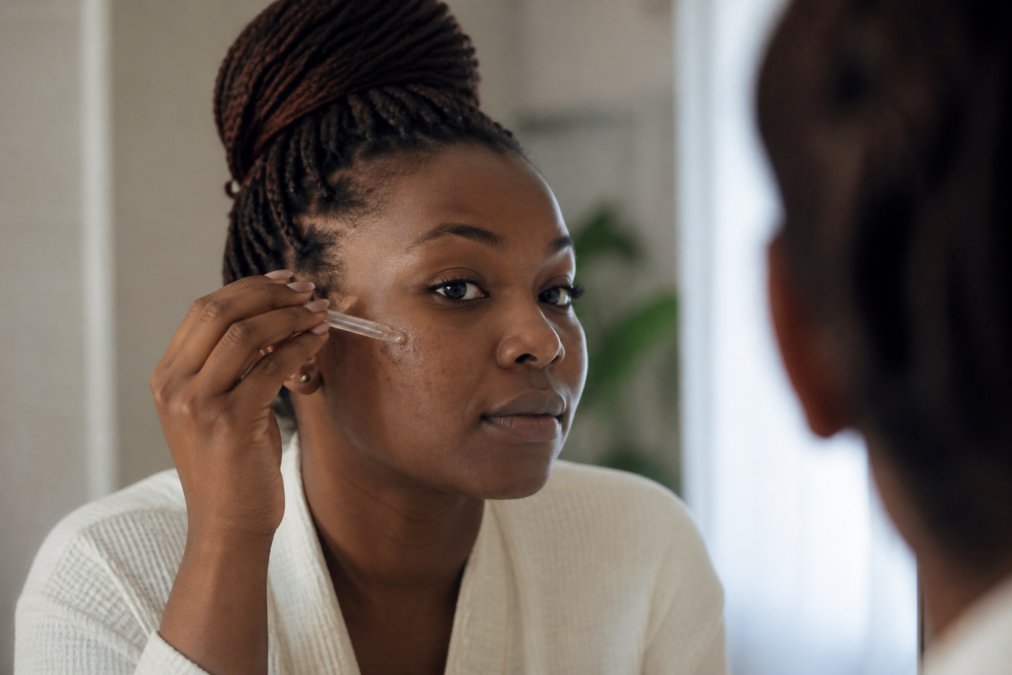
Build your routine in this order:
- Cleanse gently with an oil-based cleanser to avoid stripping the skin barrier.
- Apply a brightening serum with licorice or niacinamide to damp skin.
- Moisturize to keep the barrier intact.
- Finish with broad-spectrum sunscreen every morning, no exceptions.
This is where a product built for melanated skin matters. LUV + CO. formulates its skincare specifically for sensitive, melanin-rich skin, so you're not guessing whether an ingredient will trigger a reaction.

How Long Does It Take to Treat Hyperpigmentation
Expect eight to twelve weeks before you see meaningful fading, and longer for melasma (the American Academy of Dermatology). Hyperpigmentation treatment is a marathon, not a sprint, and anyone promising results in a week is selling you something.
Here's why it takes so long: the pigment you see today was formed weeks ago. Natural ingredients work by preventing new pigment and gradually encouraging old pigment to shed through normal skin cell turnover. That process runs on your skin's schedule, not yours.
A realistic timeline:
| Timeframe | What to Expect |
|---|---|
| Weeks 1-2 | Skin feels calmer, less inflamed |
| Weeks 3-6 | Early lightening on newer, shallow spots |
| Weeks 8-12 | Visible fading on most PIH |
| Months 3-6 | Melasma and deep spots begin to respond |
Consistency matters more than intensity. Skipping days resets your progress.
Sun Protection and Lifestyle Habits That Worsen Hyperpigmentation
UV exposure is the single biggest factor keeping dark spots dark. Without daily sunscreen protection, even the best natural ingredients can't outrun the sun.
The Skin Cancer Foundation's sun protection guidance recommends broad-spectrum sunscreen with SPF 30 or higher, reapplied every two hours outdoors. For melanated skin, look for formulas that don't leave a gray cast.
Beyond sunscreen, these habits feed hyperpigmentation:
- Picking at acne or scabs, which creates new PIH
- Hot showers and harsh cleansers that strip the skin barrier
- Skipping moisturizer, which weakens the skin's defenses
- Unmanaged stress, which drives inflammation
Common Mistakes and Ingredients to Avoid
The biggest mistake is treating hyperpigmentation with harsh, fast-acting products. Strong irritants cause inflammation, inflammation triggers melanin, and you end up with more discoloration than you started with. On melanated skin that rebound happens faster and darker than most people expect.
Ingredients and habits to avoid:
- Undiluted apple cider vinegar, which is too acidic for facial skin and can burn
- Raw red onion juice, a popular home remedy with no evidence and real irritation risk
- Lemon juice applied directly to the face, which causes phytophotodermatitis, a burn-like reaction that worsens in sunlight
- High-concentration essential oils applied directly to skin
- Physical scrubs with rough, jagged particles
- Any product that makes your skin sting on contact
Apple cider vinegar and red onion both circulate online as natural lightening agents. Neither belongs on your face undiluted. The acetic acid in vinegar and the sulfur compounds in onion can damage the skin barrier, and damaged barriers produce more pigment.
The Interaction Warning Nobody Gives You
Natural acids do not play well with active skincare. If you are using a prescription retinoid, an over-the-counter retinol, or a benzoyl peroxide acne treatment, adding lemon juice, apple cider vinegar, or a high-percentage lactic acid peel to the same routine can strip the barrier in a matter of days. The result is redness, stinging, and a fresh wave of dark spots that can take months to fade.
The safe pattern is to alternate. Use your active treatment on some nights and your gentle natural brightener on others, never both within the same hour. If your skin stings when you apply moisturizer, that is your signal to pause all exfoliation for at least a week.
How to Recover If You Have Already Irritated Your Skin
Stop every active product immediately, acids, retinoids, vitamin C, and any essential oil. Wash with lukewarm water and a fragrance-free cleanser, then apply a plain ceramide moisturizer twice a day. Skip sunscreen only if you are staying indoors; otherwise keep wearing it, because UV exposure on a damaged barrier deepens existing pigment. Most irritation-driven darkening begins to settle within two to four weeks of strict barrier care, but the pigment itself can take three to six months to fade. If the area is painful, blistering, or spreading, see a dermatologist rather than waiting it out.
If you have severe or persistent hyperpigmentation, a dermatological consultation is worth the investment. A professional can rule out other conditions and guide treatment for stubborn cases.
Frequently Asked Questions
Can hyperpigmentation be treated naturally?
Yes, many natural ingredients can help fade facial hyperpigmentation over time. Green tea extract, licorice root, niacinamide, and vitamin C have research supporting their ability to interrupt melanin production and calm inflammation. The key is consistency and patience. Natural remedies work gradually by supporting skin cell turnover and reducing tyrosinase enzyme activity. Pairing them with daily sunscreen protection prevents new dark spots from forming while existing ones fade.
How long does it take to treat hyperpigmentation with natural ingredients?
Most people see visible improvement in 8 to 12 weeks with consistent use of natural ingredients for hyperpigmentation. Post-inflammatory hyperpigmentation from acne may fade faster, often within 6 to 8 weeks. Melasma and sun damage typically take longer, sometimes 3 to 6 months. Skin cell turnover happens roughly every 28 days in younger skin and slows with age, so deeper pigment takes multiple cycles to surface and fade.
Are natural remedies safe for sensitive, melanated skin?
Many natural ingredients are gentle enough for sensitive, melanated skin, but not all. Apple cider vinegar, lemon juice, and high-concentration essential oils can disrupt the skin barrier and cause irritation that worsens dark spots. Always do a patch test on your inner arm for 24 hours before applying anything new to your face. Ingredients like green tea, licorice extract, and niacinamide tend to be well tolerated. Stop use if you notice redness, stinging, or new discoloration.
What worsens hyperpigmentation on the face?
UV exposure is the biggest trigger because it signals melanin production. Picking at acne, aggressive scrubbing, and using harsh acids without building tolerance all cause inflammation that leads to new dark spots. Some medications, including certain antibiotics and hormones, increase photosensitivity. Heat and friction from workouts or hot yoga can also flare melasma. Daily broad-spectrum sunscreen with SPF 30 or higher is the single most important step to stop hyperpigmentation from getting worse.