
Table of Contents
- Quick Comparison: Clean Makeup for Sensitive Acne-Prone Skin
- Acne-Safe Makeup Ingredients to Avoid
- How to Check If Makeup Causes Acne
- Best Clean Concealer for Acne Scars and Hyperpigmentation
- How to Build a Clean Makeup Routine for Sensitive Acne-Prone Skin
- Budget-Friendly vs. Luxury Clean Makeup: What Actually Costs More
- Conclusion
- Frequently Asked Questions
Last Updated: September 14, 2026
Quick Comparison: Clean Makeup for Sensitive Acne-Prone Skin
Clean makeup for sensitive acne-prone skin is cosmetics formulated to minimize pore-clogging ingredients while avoiding common irritants like synthetic fragrance and heavy dyes. At LUV + CO., we build every complexion product around that standard: mineral pigments, talc-free formulas, and shades developed specifically for melanated skin.
Here's the uncomfortable truth most "clean" beauty marketing skips: a product can carry a green label, a botanical ingredient list, and a clean-beauty seal, and still trigger breakouts on reactive skin. Clean and acne-safe are not the same claim, and treating them as interchangeable is the most common mistake we see.
Below, we break down which ingredients actually clog pores, how to patch test without wasting money, and which formulas earn a permanent spot in a sensitive-skin routine. The comparison table below summarizes our own lineup so you can scan it before reading the detail.
| Product | Price | Coverage | Best For |
|---|---|---|---|
| Melanin Match Liquid Foundation | $44.00 | Medium, buildable | Everyday wear, normal to dry skin |
| Melanin Match HD Cream Foundation + Concealer | $49.00 | Medium to full | Hyperpigmentation, targeted concealing |
| Chamomile Face & Eye Primer | $36.00 | Prep only | Smoothing texture before foundation |
| Melanin Magic Tinted Translucent Powder | $49.00 | Setting only | Reducing shine without an ashy cast |
Acne-Safe Makeup Ingredients to Avoid
Acne-safe makeup avoids ingredients that either physically block the pore opening or provoke an inflammatory response on reactive skin. Those are two different problems, and the fix for each is different. A pore-clogging emollient and a fragrance allergen can both cause a breakout, but only one of them is comedogenic in the clinical sense.

That distinction matters because the ingredient list on a "clean" product is often built to avoid the second problem while quietly causing the first.
The two mechanisms behind a makeup breakout
Comedogenesis happens when an ingredient sits in the follicular opening and slows the natural shedding of dead skin cells. Sebum and keratin back up, and a closed comedo forms. This is a mechanical, dose-dependent process, concentration and the rest of the formula matter as much as the ingredient itself.
Irritant contact dermatitis happens when an ingredient damages the skin barrier or triggers an immune response. The result looks like a breakout but is actually inflammation: redness, small papules, and stinging rather than true comedones. Fragrance, essential oils, and some preservatives drive this pattern far more often than they drive true comedogenesis.
If your breakouts appear within hours and sting, suspect irritation. If they appear over one to three weeks as small flesh-colored bumps, suspect comedogenesis.
Ingredients worth screening out
- Fragrance and "parfum." FDA guidance on cosmetic labeling and fragrance ingredients notes that the single term "fragrance" can legally cover a blend of dozens of undisclosed compounds, so "fragrance-free" claims are not always accurate. Fragrance is the leading cause of cosmetic contact irritation (pubmed.ncbi.nlm.nih.gov).
- Synthetic dyes (FD&C and D&C colors). Common triggers for irritation around the eyes and mouth, where the barrier is thinnest.
- Heavy occlusive oils, coconut oil, wheat germ oil, cocoa butter. These sit high on the comedogenicity scale for many people because they are rich in fatty acids that feed Cutibacterium acnes.
- Denatured alcohol in high concentrations. Strips the barrier, which can rebound into excess oil production.
- Bismuth oxychloride. A mineral filler linked to itching and irritation for some users; also heavy enough to emphasize texture.
- High-molecular-weight silicones such as dimethicone crosspolymers. Not inherently harmful, but they can trap debris and sebum against breakout-prone skin when layered under occlusive products.
The 'clean but comedogenic' trap
This is the conflict most clean-beauty guides skip. Several of the oils that brands swap in to replace silicones and mineral oil are themselves highly comedogenic. Coconut oil, coconut-derived caprylic/capric triglyceride in heavy concentrations, marula oil, and wheat germ oil all appear on "clean" ingredient decks and all score high on the comedogenicity scale for acne-prone skin. Navigating these botanical pitfalls requires a more discerning approach to your entire routine, particularly when selecting moisturizers for acne-prone skin that prioritize non-clogging hydration over trendy natural labels.
The swap is not automatically safer. A silicone-based conventional foundation can be less comedogenic than a botanical-oil-based "clean" foundation for the same person. The label is not the variable, the ingredient and its concentration are.
A practical screen: if a clean formula lists three or more plant oils in the first ten ingredients, treat it as a patch-test candidate rather than a safe default.
The comedogenicity rating and what it misses
The comedogenicity rating scales ingredients from 0 to 5 based on how likely they are to clog pores in rabbit-ear testing (pubmed.ncbi.nlm.nih.gov). It is a useful starting point and a flawed one. The scale does not account for concentration, how ingredients interact in a finished formula, or how your individual skin responds. It also cannot capture irritation-driven breakouts at all, because it only measures comedone formation. Treat it as a filter, not a verdict.
How to Check If Makeup Causes Acne
The only reliable way to know whether a product breaks you out is a controlled patch test on your own skin. Ingredient lists narrow the field; your face makes the final call.
Here's the process we recommend:
- Isolate one product at a time. Introduce a single new item, not a full routine.
- Patch test behind the ear or along the jawline for three to five days before applying to your full face.
- Apply to half your face for one to two weeks if the patch test is clear, so the other half acts as your control.
- Photograph both sides in the same lighting each day. Breakouts from a new product typically appear within two to four weeks.
- Stop at the first sign of new congestion in the test area, and note the ingredients so you can cross-reference later.
Patch Testing and Ingredient Reading in Practice
Patch testing works best when paired with disciplined label reading. Cross-reference every new product against the ingredients that have broken you out before, and keep a running list on your phone. Over a few months, patterns emerge: you may find that fragrance is fine but coconut-derived emollients are not, or the reverse.
A common mistake is testing a new foundation while also starting a new cleanser. When a breakout appears, you have no way to know which product caused it. Change one variable at a time.
Best Clean Concealer for Acne Scars and Hyperpigmentation
The best clean concealer for acne scars and hyperpigmentation is a concentrated, mineral-pigment formula that builds in thin layers without settling into texture. Coverage matters, but so does what happens at hour six.
For deeper skin tones, the challenge compounds. Many concealers are built around pale bases that turn gray or ashy over hyperpigmentation. The fix is a shade system built on undertone and depth together, not depth alone.
Our pick is the Melanin Match HD Cream Foundation + Concealer ($49.00). It is a dual-purpose cream that works as an all-over foundation or a targeted concealer over dark spots and under-eye discoloration. The formula is talc-free.
What most reviews miss: cream concealers are more forgiving on textured skin than liquids because you can press them in rather than dragging across the surface. Tap, don't swipe.
For lighter everyday coverage, the Melanin Match Liquid Foundation ($44.00) offers medium buildable coverage with organic jojoba seed oil.

How to Build a Clean Makeup Routine for Sensitive Acne-Prone Skin
A clean routine for reactive skin is short, layered, and built on prep. Fewer products mean fewer variables and less chance of a reaction.
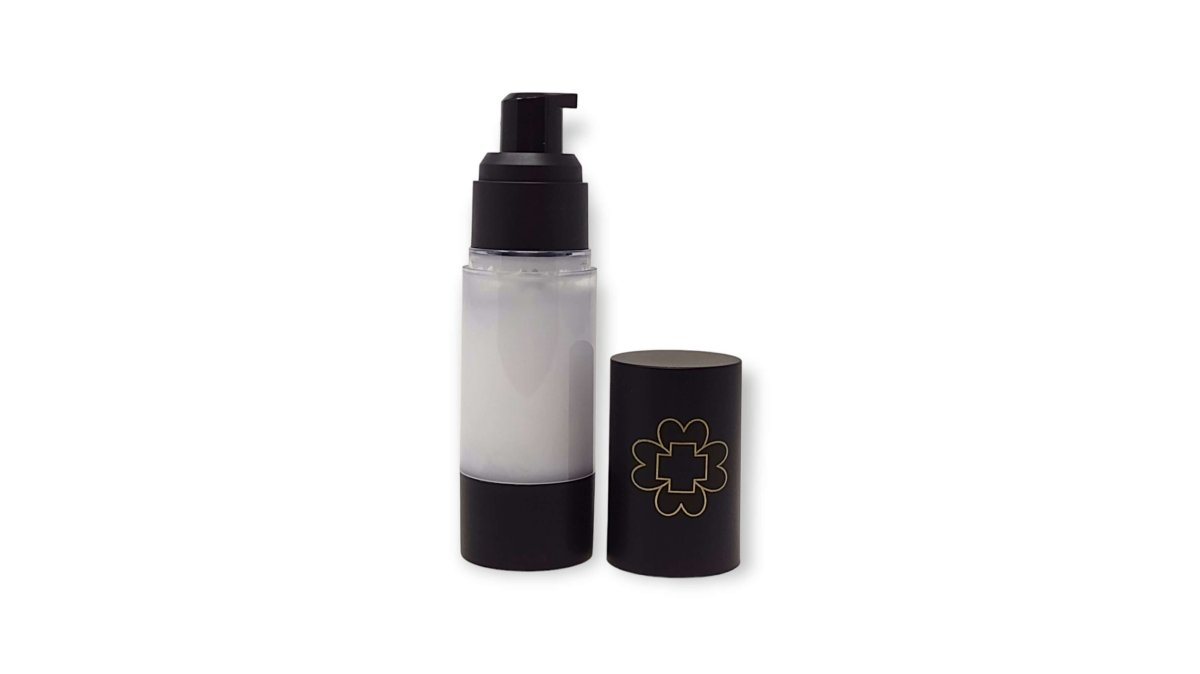
Start with clean, moisturized skin. A lightweight primer like the Chamomile Face & Eye Primer ($36.00) smooths the look of texture with chamomile hydrosol and organic aloe, so foundation applies more evenly and wears longer. Then foundation, then setting powder only where you need shine control. Set with the Melanin Magic Tinted Translucent Powder ($49.00), a deeper semi-translucent mineral formula built to avoid the chalky cast that white translucent powders leave on deeper complexions.

Makeup Application Techniques for Textured Skin
Technique changes the finish as much as the formula does. Press and stipple foundation into areas of texture instead of sweeping across them. Build coverage in thin layers, and add product only where you need it rather than across the whole face. On active breakouts, a small concealer brush gives more precision than a fingertip and keeps bacteria off the blemish.
Removal matters just as much. Leaving makeup on overnight is one of the most reliable ways to trigger congestion. A gentle micellar cleanser as a first step, followed by an emulsifying oil, lifts pigment without aggressive rubbing. LUV + CO. offers Gentle Micellar Water Cleanser & Makeup Remover and Vitamin C Cleansing Oil for Sensitive Skin.
Budget-Friendly vs. Luxury Clean Makeup: What Actually Costs More
Price and performance do not track as closely as the beauty aisle suggests. A higher price usually buys better pigment quality, more considered shade development, and a shorter ingredient list, not a fundamentally different product.
Where budget formulas cut corners: filler ingredients that dilute pigment, generic shade ranges that skip deeper undertones, and fragrance added to mask the smell of cheaper raw materials. Where luxury formulas sometimes overspend: packaging, marketing, and a brand name.
The smarter question is cost per use against how well the product matches your skin. A foundation that matches your undertone and does not break you out is cheaper over a year than three drugstore bottles that each failed. If you want to test before committing, a sampler set is the lowest-risk way in. Our I've Found LUV Sampler Collection ($47.00) includes skincare, complexion, color, and body care in one box.
Conclusion
Finding makeup that covers hyperpigmentation without triggering new breakouts is a genuine challenge, and it gets harder when most shade ranges were never built for deeper skin. The solution is a short, mineral-based routine matched to your undertone and tested one product at a time.
LUV + CO. exists for exactly this. Every formula is created for melanated, sensitive skin by a beauty product development PhD, with talc-free, vegan ingredients and shades built through our Melanin Analysis system rather than standard color analysis. Start with the sampler to test at home, or book a consultation at our studio for in-person shade matching.
Find your shade with LUV + CO. and stop choosing between healthy skin and coverage that actually matches.
Frequently Asked Questions
What is the best makeup for acne-prone, sensitive skin?
The best clean makeup for sensitive acne-prone skin uses non-comedogenic, fragrance-free formulas with mineral pigments like zinc oxide and titanium dioxide. Look for talc-free, oil-free products that won't clog pores or trigger inflammation. LUV + CO.'s Melanin Match Liquid Foundation ($44) pairs organic jojoba oil with mineral pigments to provide buildable coverage without irritating reactive skin.
How do I know if makeup is non-comedogenic?
Check the ingredient list for pore-clogging ingredients like coconut oil, isopropyl myristate, and heavy silicones. A non-comedogenic label helps, but it's not regulated, so read the full list. LUV + CO.'s Melanin Match HD Cream Foundation + Concealer ($49) is talc-free, making it a safer choice for breakout-prone skin than cream formulas built on heavy emollients.
What makeup products are safe for sensitive, acne-prone skin?
Safe options include mineral-based foundations, fragrance-free concealers, and oil-free setting powders. Avoid synthetic dyes, parabens, and formulas with high concentrations of botanical extracts that can trigger sensitivity. LUV + CO.'s Chamomile Face & Eye Primer ($36) uses chamomile hydrosol and aloe to prep skin without irritation, and the Melanin Magic Tinted Translucent Setting Powder ($49) is a three-ingredient mineral formula with no preservatives or fillers.
How can I check if a foundation will break me out before buying?
Patch test on your jawline for three to five days before applying to your full face. Review the ingredient list for your known acne triggers, and check whether the formula is oil-free and non-comedogenic. LUV + CO. offers the I've Found LUV Sampler Collection ($47) so you can test complexion products on your skin before committing to a full-size foundation.
Can clean makeup actually cover acne scars and hyperpigmentation?
Yes, with the right formula and technique. Medium-to-full buildable coverage applied in thin layers over a primer can conceal dark spots and uneven tone without looking cakey. LUV + CO.'s Melanin Match HD Cream Foundation + Concealer ($49) is designed for targeted coverage over hyperpigmentation and under-eye discoloration, and it doubles as a concealer so you can spot-conceal without layering multiple products.