

Table of Contents
- Why Makeup Causes Breakouts on Acne-Prone Skin
- Step 1: Prepare Your Skin Before Applying Makeup
- Step 2: Choose Non-Comedogenic Makeup Brands and Products
- Step 3: Identify Ingredients to Avoid in Makeup for Acne-Prone Skin
- Step 4: Master Double Cleansing to Remove Makeup Properly
- Step 5: How to Clean Makeup Brushes to Prevent Acne
- Step 6: Maintain Makeup Application Hygiene
- Common Mistakes That Make Breakouts Worse
- Frequently Asked Questions
Last Updated: October 1, 2026
Why Makeup Causes Breakouts on Acne-Prone Skin
Makeup causing breakouts is frustrating, especially for people with sensitive, melanated skin. Understanding why it happens is the first step to preventing it. The right approach makes all the difference.
How pore-clogging happens
Breakouts start when makeup traps oil, sweat, and dead skin cells in your pores. This buildup creates an environment where bacteria thrive.
Heavy foundations, powders with talc, and silicone-heavy products are common culprits. The problem worsens if you skip cleansing or use the wrong removal products.
Key factors that trigger pore-clogging:
- Thick, occlusive formulas that don't let skin breathe
- Oil-heavy ingredients that sit on top of skin
- Powders that absorb moisture and harden on the surface
- Products left on skin overnight or for extended periods
Bacterial buildup and inflammation
When pores stay clogged, bacteria multiply and trigger inflammation, redness, and breakouts. Dirty brushes transfer bacteria directly to your face, undoing the benefits of non-comedogenic products. Your skin responds by producing more oil, creating a cycle that traps more debris and causes more breakouts.
Step 1: Prepare Your Skin Before Applying Makeup
Your skin's foundation matters more than your makeup choice. Starting with clean, properly moisturized skin prevents most breakout triggers before they start.
Start with a clean, moisturized base
Start with a gentle cleanser to remove bacteria and dead skin cells. Apply lightweight moisturizer, hydrated skin produces less excess sebum. Wait 2-3 minutes before applying makeup to avoid trapping moisture.
Prep routine checklist:
- Cleanse with a gentle, non-stripping formula
- Pat skin dry completely
- Apply lightweight moisturizer
- Wait 2-3 minutes for skin to set
- Avoid heavy creams that will sit under makeup all day
Apply a primer designed for acne-prone skin
Use a pore-minimizing primer designed for sensitive skin. Apply sparingly to your T-zone and chin, too much product traps moisture and bacteria. The primer acts as a barrier between skin and foundation, reducing bacterial transfer.
Step 2: Choose Non-Comedogenic Makeup Brands and Products
The label "non-comedogenic" is your most important tool for preventing makeup from causing breakouts. But understanding what it actually means helps you make smarter choices.
What non-comedogenic means
Non-comedogenic means a product has been tested and shown not to clog pores. Look for products with dermatologist approval or third-party testing. Non-comedogenic doesn't mean oil-free, some oils don't clog pores; the key is using oils that won't trap bacteria or cause inflammation.
What to look for on labels:
- "Non-comedogenic" or "won't clog pores"
- "Dermatologist-tested" or "dermatologist-approved"
- "For acne-prone skin" or "for sensitive skin"
- Ingredient lists free of heavy occlusives
Mineral versus silicone-based formulas
Mineral-based foundations use mineral pigments that sit on top of skin rather than absorbing into pores. They're lighter, less likely to trap bacteria, and work well for melanated skin tones. LUV + CO.'s Melanin Match Liquid Foundation uses mineral pigments chosen to match melanated skin without ashy undertones.

Silicone-based foundations create a smooth finish and last longer but can trap bacteria if not removed properly. For acne-prone, melanated skin, mineral formulas are the safer choice.
Step 3: Identify Ingredients to Avoid in Makeup for Acne-Prone Skin
Knowing what to avoid is as important as knowing what to choose. Certain ingredients are notorious for triggering breakouts, especially on sensitive skin.
Oil-heavy and occlusive ingredients
Heavy oils and waxes trap bacteria and sebum. Avoid coconut oil, lanolin, paraffin wax, isopropyl myristate, and D&C red dyes. Oils in the first five ingredients are present in high concentrations. Lightweight oils like jojoba oil, squalane, and sunflower seed oil are safer choices.
Fragrance and irritating additives
Fragrance is a common breakout trigger. Avoid alcohol denat, synthetic dyes, talc, and phthalates. Choose products labeled "fragrance-free" rather than "unscented." LUV + CO. products are formulated without talc, parabens, and synthetic fragrance, known irritants for melanated, sensitive skin.
Step 4: Master Double Cleansing to Remove Makeup Properly
Double cleansing is the most important step for preventing makeup from causing breakouts. It removes makeup, oil, bacteria, and debris that would otherwise sit on your skin overnight.
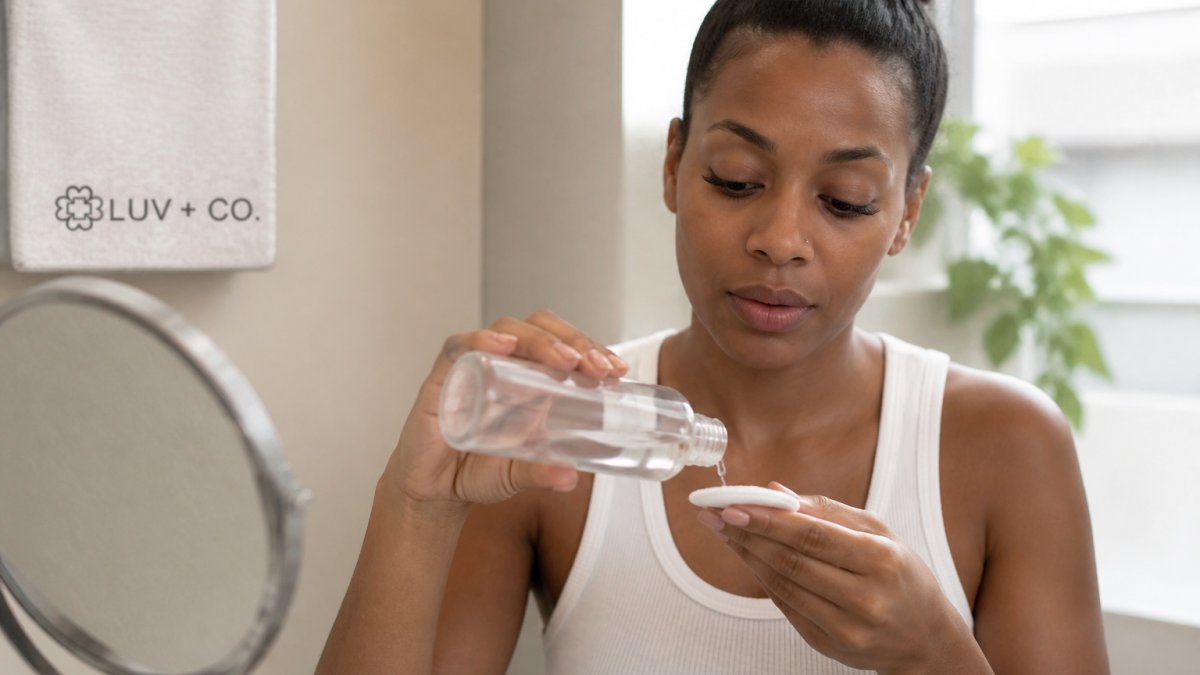
First cleanse with micellar water
Micellar water gently removes makeup without harsh rubbing. Saturate a cotton pad and wipe your face, focusing on the eyes, jawline, and forehead. This removes visible makeup and surface oil. The second cleanse removes what remains.
Second cleanse with oil-based cleanser
An oil-based cleanser dissolves remaining makeup and oil. Massage a small amount onto dry skin for 30-60 seconds, then add water to emulsify and rinse. This step is crucial, any leftover makeup residue allows bacteria to multiply overnight.
Double cleansing steps:
Gentle Micellar Water Cleanser & Makeup Remover →
- Saturate cotton pad with micellar water
- Gently wipe entire face, focusing on heavy makeup areas
- Massage oil cleanser onto dry skin for 30-60 seconds
- Add water to emulsify and rinse thoroughly
- Follow with a hydrating toner and moisturizer
Step 5: How to Clean Makeup Brushes to Prevent Acne
Dirty brushes transfer bacteria directly to your face. Weekly cleaning prevents this.
Weekly brush cleaning routine
Wash brushes weekly in warm water with gentle cleanser. Swirl each brush in soapy water and rinse until clear. For heavy buildup, soak for 5-10 minutes first. Use warm water, not hot, to avoid damaging bristles.
Drying and storage best practices
Squeeze out excess water gently and lay brushes flat to dry, never upright, as water pools inside. Store in a clean, ventilated container. Replace brushes every 6-12 months, as bristles eventually break down and harbor bacteria.
Brush cleaning checklist:
- Wash weekly with gentle cleanser
- Use warm water, not hot
- Rinse until water runs clear
- Lay flat to dry, never upright
- Store in a clean, ventilated container
- Replace every 6-12 months
Step 6: Maintain Makeup Application Hygiene
How you apply makeup matters as much as what you apply. Small hygiene habits prevent bacteria from reaching your skin in the first place.
Avoid touching your face during the day
Every time you touch your face, you transfer bacteria from your hands to your skin.
If you need to adjust makeup during the day, use a clean tissue or a dedicated blotting paper.
Resting your chin on your hand, rubbing your eyes, or touching breakout-prone areas transfers bacteria directly to those spots.
Replace expired products and contaminated items
Makeup expires. Old products develop bacterial growth and lose their effectiveness.
Mascara should be replaced every 3 months (the FDA). Liquid products like foundation develop bacteria faster than powders. If a product smells off or looks separated, it's contaminated, throw it away.
Sponges and applicators need frequent replacement. If you use a beauty sponge, replace it monthly. Sponges harbor bacteria even after washing.
Keep your makeup bag clean. Wipe the inside regularly and remove old products.
Common Mistakes That Make Breakouts Worse
Sleeping in makeup. This is the biggest mistake.
Using the wrong cleanser. Harsh, stripping cleansers damage your skin barrier.
Skipping the second cleanse. Many people use micellar water and think they're done. Micellar water removes visible makeup, but oil-based cleansers remove what you can't see. Skipping this step leaves residue that traps bacteria.

Layering too much product. More coverage doesn't mean better coverage.
Ignoring patch testing. New products can trigger reactions.
| Common Mistake | Why It Causes Breakouts | The Fix |
|---|---|---|
| Sleeping in makeup | Bacteria multiply overnight; skin can't repair | Remove makeup every night without exception |
| Wrong cleanser | Damages skin barrier; increases oil production | Use gentle, non-stripping formula |
| Skipping oil cleanse | Leaves residue that traps bacteria | Always double cleanse with micellar + oil |
| Dirty brushes | Transfer bacteria directly to face | Wash weekly; replace every 6-12 months |
| Too many products | Layers trap moisture and bacteria | Use less; build coverage gradually |
| Wrong formula type | Heavy products clog pores for your skin | Test mineral vs. silicone; choose what works |
| No patch testing | Allergic reactions trigger inflammation | Patch test 24-48 hours before full use |
Start with non-comedogenic, mineral-based products designed for melanated, acne-prone skin.
Frequently Asked Questions
What ingredients in makeup are most likely to cause acne?
Pore-clogging ingredients include heavy oils, silicones, and occlusives that trap bacteria and sebum. Fragrance and synthetic dyes can trigger inflammation in sensitive, acne-prone skin. Look for products labeled non-comedogenic and free from pore-clogging agents. Patch testing new products helps identify personal triggers before applying full-face makeup.
How often should I clean my makeup brushes to prevent breakouts?
Clean makeup brushes weekly to prevent bacterial buildup that transfers to your face during application. Dirty brushes accumulate old makeup, oil, and debris that clog pores and cause active acne. Use warm water and a gentle cleanser, rinse thoroughly, and allow brushes to air-dry completely before use.
Is mineral makeup better for acne-prone skin than traditional formulas?
Mineral makeup can be gentler for acne-prone skin because mineral pigments typically have fewer pore-clogging additives and are less likely to irritate sensitive skin. However, not all mineral formulas are non-comedogenic. Check the product label and ingredient list regardless of formula type. The best choice depends on your specific skin sensitivities and how the formula performs on your skin through patch testing.
What's the best way to remove makeup to prevent clogged pores?
Double cleansing is the most effective method: first use a micellar water or water-based cleanser to remove surface makeup and debris, then follow with an oil-based cleanser to dissolve stubborn makeup and sunscreen without stripping the skin. This two-step process removes all residue that can trap bacteria and cause breakouts. Always finish with a gentle toner and moisturizer to support your skin barrier.