
Table of Contents
- Is Expensive Makeup Worth the Cost? A Quick Comparison
- Which Expensive Makeup Products Are Worth It?
- Makeup Products to Save Money On
- How to Compare Makeup Ingredients and Performance
- Cost Per Use: The Math That Settles the Splurge Question
- Frequently Asked Questions
Last Updated: October 13, 2026
Is Expensive Makeup Worth the Cost? A Quick Comparison
The short answer: sometimes, and it depends on the category. Expensive makeup earns its price when the formula solves a problem cheaper products can't, like covering hyperpigmentation on sensitive, melanated skin without irritation. It rarely earns its price on packaging alone.
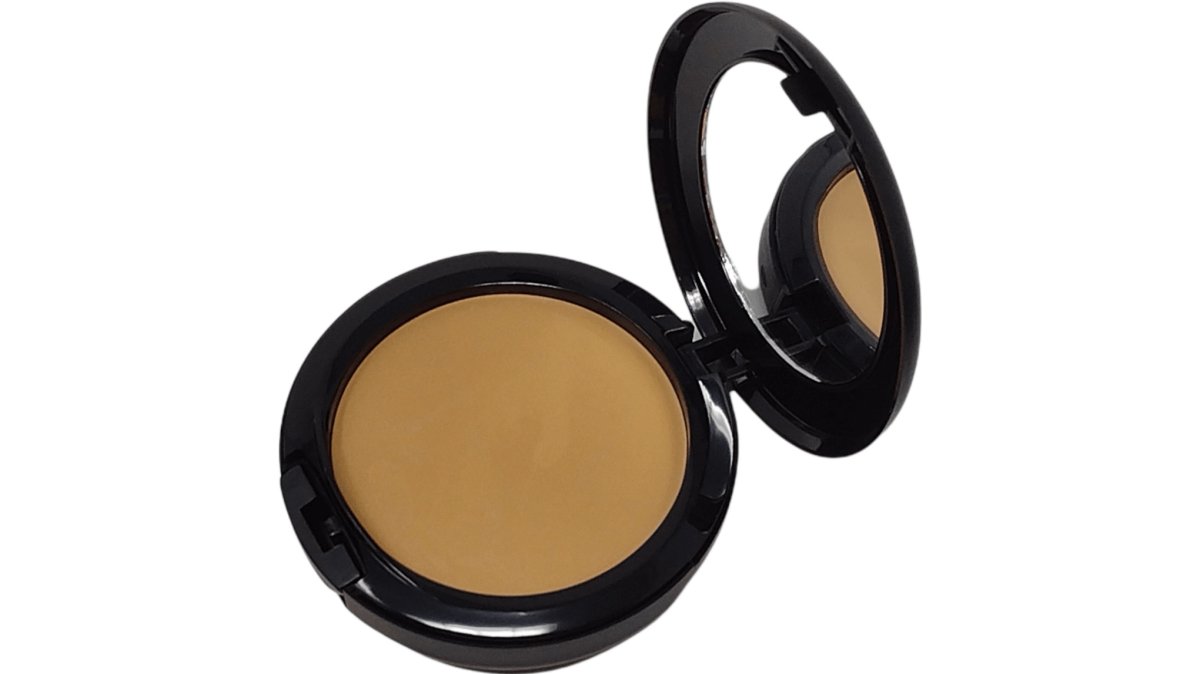
At LUV + CO., we build every formula around that distinction. Our Melanin Match Liquid Foundation ($44) and HD Cream Foundation + Concealer ($49) cost more than a drugstore bottle, and here's why: mineral pigments, sodium hyaluronate, organic jojoba seed oil, and 16 shades built across warm, cool, neutral, and olive undertones.


Where the gap is smallest: mascara and powder blush. Where it's widest: foundation and concealer, especially for deeper skin tones with undertones that mass ranges skip.
Which Expensive Makeup Products Are Worth It?
Foundation, concealer, and pigmented lipstick are the three categories where spending more usually pays off. Everything else is negotiable.
Foundation and Concealer
Foundation is the product you wear closest to your skin, all day, across your whole face. That makes formula quality and shade accuracy worth paying for. Our Melanin Match HD Cream Foundation + Concealer ($49) does double duty: wear it as an all-over cream foundation, or tap it only onto dark spots and under-eye discoloration.
The Liquid Foundation ($44) suits normal-to-dry skin that wants medium, buildable coverage with a natural matte finish. Not sure which? Order a foundation sample for $3.50 before committing.

Mascara and Lipstick
Mascara is the one category where we tell people to save. It expires fast, and drugstore formulas perform well. Our Natural Lift Mascara ($29) exists for a specific reason: sensitive eyes.
Lipstick sits in the middle. On naturally pigmented lips, cheap formulas go sheer or chalky. Our Non-Toxic Moisturizing Lipstick ($28) uses a high pigment ratio and 80% organic ingredients, with no synthetic dyes, so shades like Magic and Lovesick read true on deeper lip tones.
Makeup Products to Save Money On
Save on anything that expires quickly or relies on color rather than skin compatibility. Mascara tops that list, followed by powder blush, eyeshadow, and brow pencils.
Spend on the products that live on your face for ten hours: foundation, concealer, and lipstick. That's where a bad formula causes breakouts, oxidation, or a gray cast, and where rebuying cheap failures costs more than buying well once.
How to Compare Makeup Ingredients and Performance
Comparing makeup comes down to reading the ingredient list, understanding what each ingredient actually does, and testing on your own skin under consistent conditions. Most shoppers stop at the label's marketing claims. The useful comparison happens at the formula level. This same analytical rigor should be applied when evaluating the efficacy of professional-grade skincare to determine if the active concentrations truly justify the premium investment.
Read the ingredient list in order
Ingredients are listed by weight until you reach the 1% line, after which order is flexible. That means the first five ingredients tell you more about a formula than the last twenty combined.
- Emollients and humectants (jojoba seed oil, sodium hyaluronate, glycerin) sit near the top of a skin-conditioning formula. They affect how foundation spreads and whether it feels tight by hour six.
- Pigment dispersions (iron oxides, titanium dioxide, mica) determine coverage and shade accuracy. A higher pigment load means less product per application, which changes your real cost per use.
- Fillers (talc, kaolin, silica) add slip and oil absorption. They aren't inherently bad, but a formula built mostly on fillers tends to fade faster and settle into texture.
A higher price does not automatically mean a better ingredient deck. Some luxury formulas lean on the same fillers as drugstore ones and charge for packaging. The reverse is also true: an indie formula can spend its budget on pigment and skin-conditioning agents instead of a heavy glass bottle.
Check the "may contain" line
The "may contain" or "+/- " line lists color additives that vary by shade. This is where you spot synthetic dyes (often listed as FD&C or D&C colors) versus mineral pigments. If your skin is reactive, this line matters more than the front of the box.
Foundation & Concealer Samples →
Test under controlled conditions
Anecdotal reviews treat one product as universally better. That's not how makeup works. Results vary by skin type, tone, sensitivity, and desired finish. A foundation that looks flawless on oily skin can separate on dry skin within two hours.
Here's a repeatable method you can run at home:
- Same base, same day. Apply each product over the same primer or moisturizer, on the same day, so you're comparing formulas and not your skincare routine.
- Half-face test. Wear one formula on each half of your face for a full day. This controls for lighting, sweat, and activity.
- Check at three points. Look at hour one, hour five, and hour ten under natural light and indoor lighting. Note oxidation (does the shade shift warmer or grayer?), transfer, and how the product sits in fine lines or pores.
- Patch test first. The American Academy of Dermatology's guidance on cosmetic reactions recommends patch testing new products if you have sensitive skin, especially around the eyes and on the jawline.
- Log it. Write down the shade, the wear time, and what failed. Three weeks of notes beats any single review.
Match the formula to your skin, not the price tag
- Oily skin benefits from oil-free, silica-based formulas that control shine; heavy emollient creams can slide.
- Dry skin needs humectants and oils near the top of the list to avoid a tight, patchy finish.
- Sensitive or reactive skin should prioritize short ingredient lists, fragrance-free formulas, and mineral pigments over dyes.
Cost Per Use: The Math That Settles the Splurge Question
Cost per use, not sticker price, decides whether expensive makeup is worth it. The formula is simple: divide the price by how many times you'll realistically wear the product before it expires or runs out. Most shoppers never run this math, which is why the splurge question feels subjective when it isn't.
The formula
Cost per use = purchase price ÷ realistic number of wears
Two inputs drive the result: how much product you use per application, and how long the product lasts before it expires or you abandon it.
Run the numbers across categories
| Product | Price | Typical Uses | Cost Per Use |
|---|---|---|---|
| Melanin Match Liquid Foundation | $44 | ~130 wears | $0.34 |
| Melanin Match HD Cream + Concealer | $49 | ~120 wears | $0.41 |
| Natural Lift Mascara | $29 | ~60 wears | $0.48 |
| Moisturizing Lipstick | $28 | ~150 wears | $0.19 |
| Drugstore foundation (replaced twice) | $24 total | ~90 wears | $0.27 plus irritation risk |
The gap narrows fast. A $44 foundation worn five days a week for six months costs about 34 cents per use. A $12 foundation you abandon after three weeks because it oxidizes costs about 80 cents per use, plus the cost of its replacement. When a product matches your skin and you actually finish it, the "expensive" option often costs less per wear than the cheap one you keep replacing.
Factor in the costs competitors ignore
Sticker price and cost per use are only part of the picture. Three hidden costs change the math:
- Expiration. Mascara has the shortest shelf life of any category, typically about three months after opening. A $29 mascara worn daily for 90 days costs roughly 32 cents per use; the same mascara worn twice a week costs closer to $1.10 per use. Buy mascara at a price you're comfortable tossing on schedule.
- Waste and unused product. A foundation in the wrong shade sits in a drawer until it expires. That's 100% waste, no matter the price. Samples and shade-matching tools exist specifically to prevent this.
- Return policies. Many retailers accept opened cosmetics within a set window, and some brands offer satisfaction guarantees. A generous return policy lowers your real risk on a splurge, because a product that doesn't work can become a refund instead of a loss. Check the policy before you buy, not after.
When the math favors spending more
Spend more when the product sits on your skin all day (foundation, concealer, lipstick), when shade accuracy is hard to find at a low price, or when your skin is reactive and a bad formula causes breakouts. In those cases, a failed cheap purchase costs more than the splurge.
When the math favors saving
Save when the product expires fast (mascara), when color payoff is easy to find cheaply (powder blush, eyeshadow, brow pencils), or when you wear it rarely. A product you use twice a month has a high cost per use no matter how little it cost.
Frequently Asked Questions
What expensive makeup products are actually worth the cost?
Foundation and concealer tend to justify higher prices most often because shade accuracy, buildable coverage, and how a formula wears over eight hours are hard to replicate cheaply. LUV + CO Melanin Match Liquid Foundation ($44) is built for melanated sensitive skin with 16 shades across warm, cool, neutral, and olive undertones. Mascara and lipstick can go either way; a $29 sensitive-eye formula like Natural Lift Mascara solves a specific problem that a $8 tube often cannot.
Is expensive makeup better than drugstore makeup?
Not across the board. High-end makeup usually wins on pigment load, shade range depth, and wear time, while drugstore makeup often matches it on powder products, pencils, and basic lip gloss. The gap narrows when you compare cost per use instead of sticker price. A $44 foundation worn five days a week for four months costs about $0.55 per use, which can beat three $12 bottles you replace every six weeks.
Which makeup products should I save money on?
Save on products where the formula matters less than the color or the tool: eyebrow pencils, eyeliner, lip gloss, loose setting powder, and makeup sponges. These items get used up fast, get lost in a bag, or get replaced on a short cycle. Spend on anything that sits on your skin all day, especially foundation, concealer, and anything that touches sensitive eyes or lips.
How do I tell whether a makeup product is worth the price?
Divide the price by the number of uses you realistically get. Then check three things: how much product you need per application, how long the formula lasts on your skin, and whether the shade actually matches your undertone. A cheaper product that oxidizes orange or needs three layers to cover hyperpigmentation costs more per use than a concentrated formula you apply once.
Can affordable makeup perform as well as high-end makeup?
Sometimes, and it depends on the category. Affordable powder blush, lip gloss, and eyeliner can perform close to high-end versions. The gap shows up most in foundation, concealer, and mascara, where pigment quality, shade range across deeper skin tones, and transfer resistance drive the price. Samples help: LUV + CO Foundation & Concealer Samples cost $3.50, so you can test a shade before committing to a full size.