

Last Updated: October 29, 2026
Quick Summary
Fragrance-free makeup is the safest choice for contact lens wearers because added fragrance is one of the most common triggers of eye-area irritation, and irritation makes lenses harder to tolerate. Choose fragrance-free, ophthalmologist-tested cream or liquid formulas, since loose powders shed particles onto the lens.
- Unscented products may contain masking fragrances, so confirm no parfum or fragrance appears in the ingredient list.
- Cream-based or liquid eyeliners and shadows avoid the fine particles that transfer to lenses.
- Insert lenses before applying makeup, and remove makeup before taking lenses out.
- Replace eye makeup every three months and never share eye products.
- Keep liner on the lid side of the lash line rather than the waterline.
Table of Contents
- Why Fragrance-Free Makeup Matters for Contact Lens Wearers
- Makeup for Contact Lens Wearers: What to Look For
- Mascara for Sensitive Eyes: What Actually Works
- Makeup Ingredients to Avoid for Sensitive Eyes
- Hypoallergenic Makeup Brands: What the Label Really Means
- Application and Removal Techniques for Lens Wearers
- Find Your Shade and Build a Lens-Safe Routine
- Frequently Asked Questions
Why Fragrance-Free Makeup Matters for Contact Lens Wearers
The mechanics are simple. Fragrance compounds are volatile, and the skin around the eyes is the thinnest on the face. Particles and vapors migrate toward the lash line, then onto the lens surface.
This is not a fringe concern. Johns Hopkins Medicine guidance on eye makeup for sensitive eyes advises choosing unscented, hypoallergenic cosmetics, and CooperVision's guidance for contact lens wearers recommends hypoallergenic, oil-free, and fragrance-free formulas.
"Fragrance-free" is more than a marketing label. It is a formulation decision, and it changes how a product behaves on your skin and on your lenses.
Makeup for Contact Lens Wearers: What to Look For
The best makeup for contact lens wearers is fragrance-free, ophthalmologist-tested where possible, and formulated in cream or liquid textures rather than loose powders that shed particles onto the lens. Texture matters as much as ingredients.
Three criteria do most of the work:
- Fragrance-free, not just "unscented." Unscented products may contain masking fragrances.
- Cream or liquid eye products. Lens.com's guidance on eye makeup and contacts notes that cream-based or liquid eyeliners and shadows avoid the fine particles that transfer to lenses.
- A primer under eye color. A lightweight base keeps pigment from migrating into the eye.
Our Chamomile Face & Eye Primer for Sensitive Skin is a multi-use base you can apply thinly to the eyelid before shadow or liner, and under foundation. It is vegan, gluten-free, paraben-free, and cruelty-free, and made with certified organic ingredients, including chamomile hydrosol, jojoba oil, and aloe.

One honest limitation: no eye cosmetic can promise irritation-free wear for everyone. If you have known sensitivities, patch test first.
Mascara for Sensitive Eyes: What Actually Works
A mascara for sensitive eyes should be fragrance-free, fast-drying, and formulated to resist smudging, because flaking mascara is what ends up under a lens. Volume matters less than stability.

Our Natural Lift Mascara for Sensitive Eyes was formulated with sensitive eyes in mind. It uses organic chamomile hydrosol as its base, lifts and defines short lashes, and delivers soft, buildable volume. It is paraben-free and made with botanical ingredients, including organic sunflower seed oil.
For best results, allow the first coat to dry fully before adding a second, which helps avoid a clumpy look.
Makeup Ingredients to Avoid for Sensitive Eyes
Ingredients commonly associated with irritation in sensitive eyes include added fragrance and artificial dyes. The label "hypoallergenic" alone does not establish safety.
That last point deserves emphasis. Eyes in Disguise's eye-friendly makeup guide points out that "hypoallergenic" is an unregulated term and recommends looking instead for labels such as "ophthalmologist-tested" or "fragrance-free." We agree with that read.
Build the habit of reading the full ingredient list, not just the front of the box. If you are replacing an irritating liner, our eyeliner pencil made for sensitive eyes is an option to consider.

If you are looking for an eyeliner, our LUV Liner Natural Eyeliner Pencil for Sensitive Eyes is a 99% natural, vegan black pencil formulated with sensitive eyes in mind.
Natural Lift Mascara for Sensitive Eyes →
Hypoallergenic Makeup Brands: What the Label Really Means
Hypoallergenic makeup brands claim their products are less likely to cause allergic reaction, but the term has no standardized definition, so the claim alone tells you very little about a specific formula. What you can verify is the ingredient list, the texture, and any testing the brand discloses.
This is where we think most shoppers get led astray. A brand can call itself hypoallergenic and still include fragrance. A brand can call itself clean and still use a dye that bothers your eyes. The label is a starting point, not a verdict.
A five-point screen for lens wearers
Instead of trusting a single front-of-box claim, run every candidate product through the same screen. This is the method we use when evaluating formulas for contact lens wearers:
- Fragrance status. Look for "fragrance-free" on the label and confirm no "parfum," "fragrance," or essential-oil blend appears in the ingredient list. "Unscented" is not the same claim and may hide a masking fragrance.
- Texture and particle risk. Cream, liquid, and pressed formulas shed fewer loose particles than loose powders, glitter, and pressed shimmers with large flecks. Loose particles are what migrate onto the lens surface and cause the gritty feeling lens wearers describe.
- Eye-area testing language. "Ophthalmologist-tested" and "sensitive-eye tested" are more specific than "hypoallergenic," though neither is a guarantee. Treat them as one signal among several.
- Dye disclosure. Artificial dyes appear as CI numbers late in an ingredient list. If a product is marketed as dye-free, the list should back that up with no CI entries.
- Preservative profile. Preservatives are necessary to prevent microbial growth, but some lens wearers find certain preservatives stingy near the lash line. If you have reacted before, compare the preservative list against the product that caused the reaction.
A brand willing to publish a full ingredient list, name its formulator, and disclose testing is easier to evaluate than one that leads with adjectives. For a curated starting point, our guide to safe makeup brands for sensitive skin walks through what to check.
Why formulation, not branding, drives lens comfort
For context on why formulation expertise matters, a PubMed-indexed study on cosmetics and silicone hydrogel contact lenses examined how various cosmetics affected the physical dimensions and optical properties of three monthly replacement silicone hydrogel lenses. The finding that cosmetics can measurably affect lens properties is the reason ingredient and texture choices deserve scrutiny, not because a brand calls itself clean, but because what is actually in the formula can change how a lens behaves on the eye.
Application and Removal Techniques for Lens Wearers
The order of operations matters more than most people realize: insert lenses first, then apply makeup, and remove makeup before taking lenses out. Reversing either step is how product ends up trapped under a lens. But the sequence is only half the story, the techniques within each step are what keep product off the lens surface in the first place.
The sequence, with the lens-specific reason for each step
- Wash hands and insert lenses. Clean hands protect both the lens and the eye. Inserting first means you are not pressing a lens onto skin that already has primer or foundation on it.
- Apply primer, then foundation and eye color. A thin layer of primer on the lid keeps pigment from migrating toward the lash line as the day goes on. Keep foundation away from the immediate lash line and waterline.
- Apply mascara last and let it set. Mascara applied before lenses can transfer to the lens during insertion. Let each coat dry fully before adding another; wet, layered coats are what cause clumping and flaking.
- At night, remove makeup with a gentle remover and closed eyes, then take out lenses and clean them. Removing makeup first means you are not handling lenses with product on your fingers.
The failure modes most guides skip
- Waterline contact. Liner applied to the waterline sits directly against the tear film and the lens edge. Most practitioners recommend keeping liner on the lid side of the lash line rather than the waterline, especially for lens wearers.
- Deposit transfer. Even a fragrance-free formula can leave residue on a lens over time. Daily cleaning with the manufacturer's recommended solution, not just a rinse, is what removes the lipid and protein film that makeup can contribute to.
- Lens case hygiene. Bacteria on a mascara wand can transfer to fingers, then to the lens case, then back to the eye. Replace eye makeup every three months, never share eye products, and replace the lens case on the schedule your eye care provider recommends.
- Water-based removers. These can run into the eye. Use a small amount on a cotton pad and work outward, away from the lash line, with eyes closed.
A note on mascara and lens wear
Our Natural Lift Mascara for Sensitive Eyes was formulated with sensitive eyes in mind: organic chamomile hydrosol as its base, soft buildable volume, and a paraben-free formula. For best results, let the first coat dry fully before adding a second.
Find Your Shade and Build a Lens-Safe Routine
Shade matching and lens safety are not separate problems. A foundation that looks right but sits on irritated skin will not wear well, and a comfortable formula in the wrong shade gets abandoned.
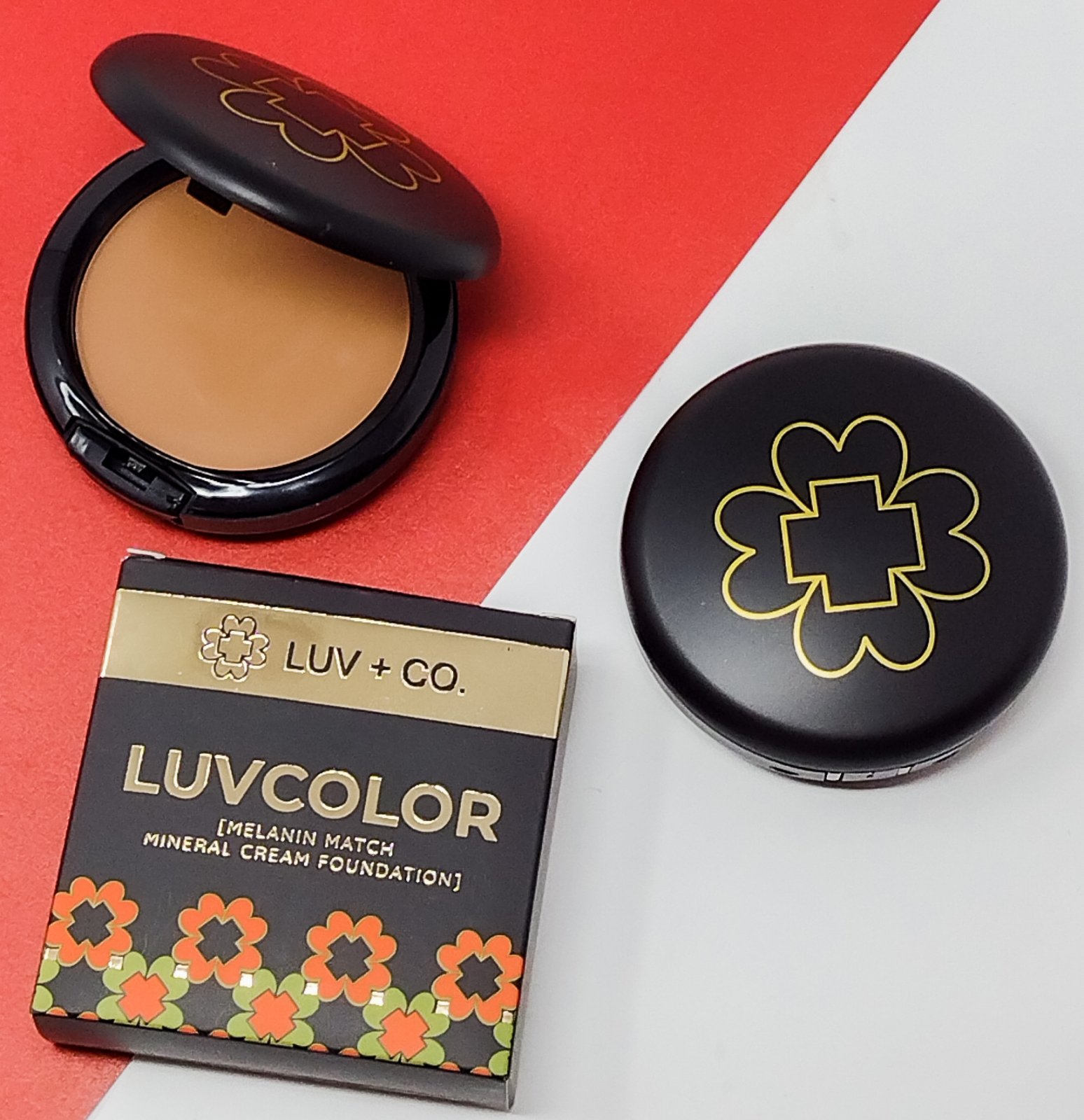
Our approach pairs the two. Our Melanin Analysis shade matching system in the LUV LAB was built to address shade matching for melanated skin. If you cannot visit the studio, mini collections let you test shades at home before committing.
A simple lens-safe routine looks like this:
| Step | Product Type | What to Check |
|---|---|---|
| Prep | Fragrance-free primer | No added fragrance, thin layer on lids |
| Eye color | Pressed or cream shadow | No artificial colors, no loose powder |
| Definition | Pencil or gel liner | Cream texture, sharpenable |
| Lashes | Sensitive-eye mascara | Fast-drying, smudge-resistant |
| Removal | Gentle eye remover | Applied with eyes closed |
Start with the eye area, get that stable, then build outward. For a step-by-step sensitive skin routine, our sensitive skin routine guide puts this advice into practice.
Frequently Asked Questions
Can you wear makeup while wearing contacts?
Yes, but the order matters. Insert your contact lenses before applying eye makeup, and remove your lenses before taking makeup off. Fragrance-free or unscented eye products are often preferred by lens wearers, since fragrance can irritate the eye area. Cream or liquid formulas are often easier on lenses than powder products that can shed particles. Always wash and dry your hands before touching your lenses or your eyes.
What ingredients should contact lens wearers avoid in eye makeup?
Watch for added fragrance, which is the most common irritant around the eyes. The term hypoallergenic is unregulated, so check the ingredient list rather than trusting the front label. Look for clear labeling such as fragrance-free or ophthalmologist-tested. If you have known allergies, review the full ingredient list with your eye doctor. Introduce one new eye product at a time so you can tell what caused a reaction if one occurs.
Is fragrance-free makeup better for sensitive eyes?
For many people, yes. Fragrance is a frequent trigger for irritation around the eye area, and both CooperVision and Johns Hopkins Medicine advise lens wearers to choose unscented or fragrance-free eye makeup. That said, fragrance-free is not a guarantee. Some people react to preservatives, dyes, or other ingredients. Look for fragrance-free formulas plus clear labeling, and patch test new products before wearing them with lenses for a full day.
How should you apply makeup when wearing contact lenses?
Put your lenses in first, then apply makeup. Use cream or liquid eye products where possible, since powders can shed particles onto the lens. Keep eyeliner on the outer lash line rather than the inner rim, and avoid tightlining. When you remove makeup, take lenses out first, then cleanse the eye area gently. Replace eye makeup every three months, and never share eye products. If irritation starts, remove the lens and the product and contact your eye doctor.
Contact lens wear and sensitive eyes do not have to mean skipping makeup. The work is in choosing fragrance-free formulas, reading ingredient lists, and applying in the right order. LUV + CO. formulates clean, non-toxic makeup for melanated, sensitive skin, with fragrance-free eye products, a shade matching system built for deeper skin tones, and formulas developed by a beauty product development PhD. Get started with LUV + CO. and find your shade with confidence.
