
Last Updated: October 31, 2026
Quick Summary
A professional beauty consultant portfolio is a curated collection of your work, consultation notes, and client results that proves what you can do before a client sits in your chair. Build it with one clear purpose and one primary audience in mind, then include 8-12 before-and-after photos, two or three written case studies, a short bio, and a services list.
- Pick one primary audience, such as prospective clients, salon owners, instructors, or brand recruiters, and build the first version for them.
- Give each case study the same five parts: client goal, assessment, recommendation, process, and outcome.
- Shoot near a window with soft daylight or one ring light at the same angle every time.
- Get a signed photo release before the shoot and keep it in the same folder as the images.
- Start with five strong photos and two case studies, then improve as you go.
Table of Contents
- Start With a Plan: Define Your Portfolio's Purpose and Career Focus
- What to Include in a Beauty Portfolio: The Core Content Checklist
- Photographing Your Work: Lighting, Image Quality, and Close-Up Shots
- Beauty Consultant Portfolio Examples You Can Learn From
- Use a Beauty Consultant Portfolio Template to Organize and Sequence Work
- How to Showcase Beauty Product Knowledge Without Sounding Like a Sales Pitch
- Get Client Consent and Set Up Your Digital and Printed Portfolio
- Enroll as a LUV + CO. Consultant and Build Your First Portfolio
- Frequently Asked Questions
Start With a Plan: Define Your Portfolio's Purpose and Career Focus
A professional beauty consultant portfolio is a curated collection of your work, consultation notes, and client results that proves what you can do before a client ever sits in your chair. A beauty consultant portfolio is not a scrapbook. It is a sales tool with a job to do. Build it with one clear purpose in mind, and the rest of the decisions get easier.
Pick the Audience Your Portfolio Must Convince
Whoever you need to impress decides what goes inside. A hiring manager at a salon wants different proof than a client booking a shade match.
- Prospective clients: want to see skin like theirs, matched well
- Salon or spa owners: want consistency and professionalism
- Beauty school instructors: want to see growth and technique
Pick one primary audience. Build the first version for them.
What to Include in a Beauty Portfolio: The Core Content Checklist
The strongest portfolios answer one question fast: can you solve a real client's problem? Skip the filler and include these pieces:
- 8-12 before-and-after photos of client transformations
- Two or three written case studies from consultations
- A short bio with your training and certifications
Consultation Work, Not Just Finished Faces
Anyone can post a pretty face. What sets a beauty consultant apart is the thinking behind the look. Photograph your setup too: the shade swatches, the consultation notes, the products laid out. A client wants to know you can listen, assess, and recommend. Show that process and you look like a professional, not a hobbyist.
Write Case Studies With a Repeatable Format
A beauty consultant's edge is the consultation itself, so give each case study the same five-part structure. Using one consistent structure turns a single appointment into a portfolio asset you can reuse for years.
- Client goal, one sentence in the client's words ("wanted a base that wouldn't oxidize on oily skin by midday").
- Assessment, what you observed: skin type, undertone, sensitivity, lifestyle, current routine.
- Recommendation, the specific products and why each one fits the assessment. Name the formula and the reason, not just the brand.
- Process, how you applied or tested it, including any patch test or shade trial.
- Outcome, the result, plus a follow-up note ("checked in after two weeks; no irritation reported").
A worked example of the format, kept short:
Goal: Client with reactive skin wanted a lip color she could wear daily without dryness. Assessment: History of flaking from long-wear mattes; prefers a soft finish. Recommendation: Our dye-free moisturizing lipstick, chosen for the absence of dye and the moisturizing base. Process: Applied a thin layer, blotted, reapplied; no patch-test reaction. Outcome: Wore it five days; reported comfort and no flaking. Follow-up booked for a mascara trial.
That same structure works for a mascara-for-sensitive-eyes consultation: state the sensitivity, explain why a sensitive-eye formula is the fit, describe the application, and record the wear test. Our mascara for sensitive eyes and dye-free moisturizing lipstick are two products you can build case studies around.
Show Product Knowledge as Advice, Not a Pitch
Tie every product in your portfolio to a client problem. Instead of "this foundation is amazing," write "this formula gave my client even coverage without a gray cast." Same product, but now it is a result. Explain why an ingredient suits sensitive skin, note which finish works for oily versus dry skin, mention how you test a shade before committing, and describe how a formula wears through a full day.
Photographing Your Work: Lighting, Image Quality, and Close-Up Shots
Bad photos sink good work. The fix is simple: consistent light, a steady hand, and a clean background.
Shoot near a window with soft daylight, or use one ring light at the same angle every time. Keep your background plain so the face is the focus. Take three shots of every look: full face, half face, and a tight close-up of the eyes or lips. For hands-on training to improve your technique, consider an Event Makeup Masterclass.
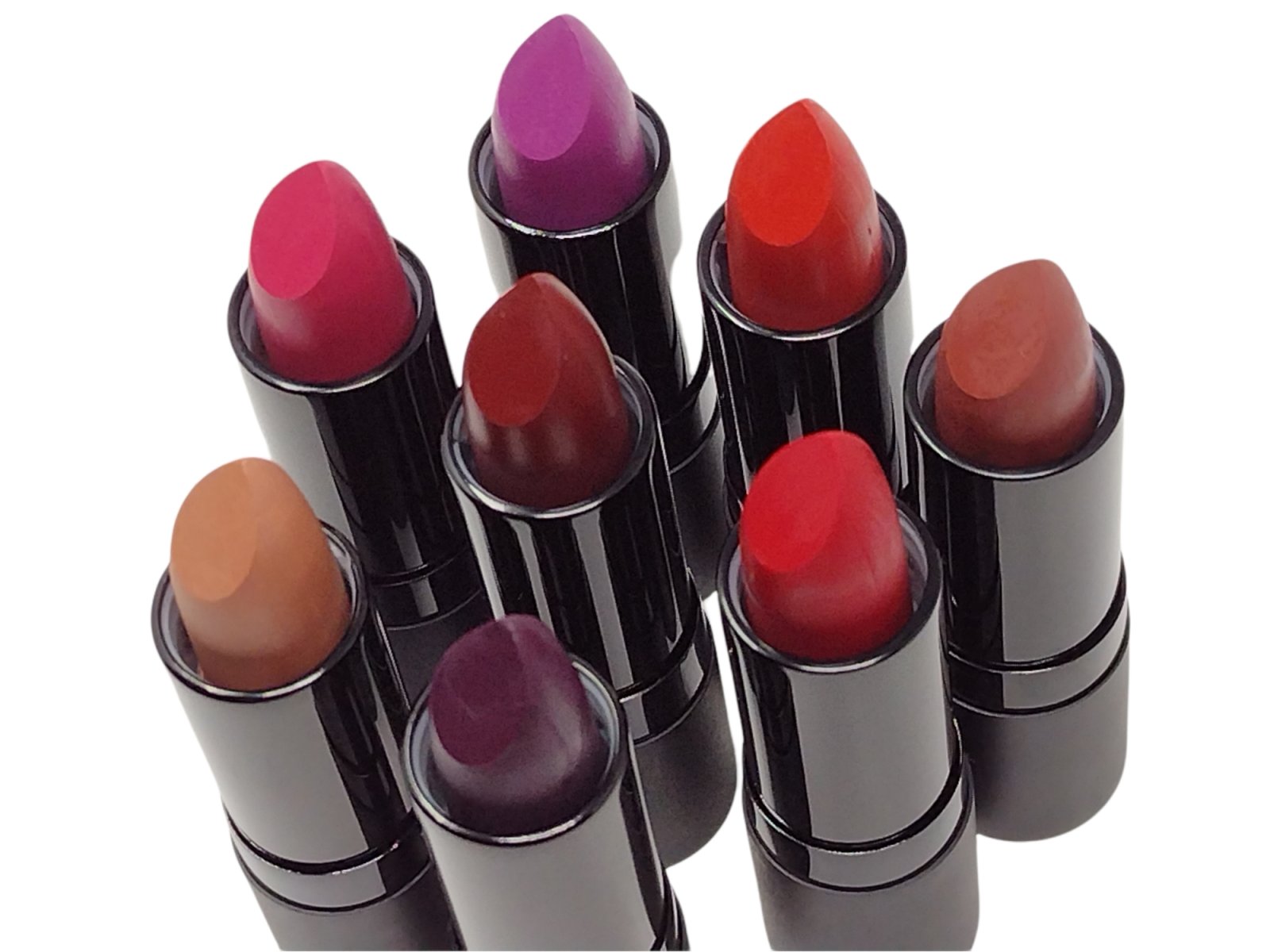
Achieving this level of visual clarity requires a nuanced understanding of how to apply makeup for professional photoshoots to ensure that every texture and pigment translates perfectly under high-intensity lighting.
A few habits that save you rework:
- Wipe your lens before every session
- Shoot in the same spot so your gallery looks unified
- Take a before photo in the same light as the after
Beauty Consultant Portfolio Examples You Can Learn From
Look at how working consultants structure their books, and patterns show up fast.
The best beauty consultant portfolio examples share three traits: a clear opening page, a logical flow from simple to complex work, and captions that explain the result. A weak portfolio dumps every photo in random order and lets the viewer guess.
Try these layouts:
- The story arc: start with a simple look, end with your most complex transformation
- The specialty book: group everything around one strength, like sensitive-skin clients
- The service menu: one section per service, each with two or three photos
Pick one and stick with it. Consistency reads as professionalism.
Use a Beauty Consultant Portfolio Template to Organize and Sequence Work
A template does the heavy lifting on layout so you can focus on content. A good beauty consultant portfolio template has fixed slots: a cover, an about page, service pages, a gallery, and a contact page.
Beauty Consultant Enrollment Fee →
Sequence matters more than volume. Open with your strongest image. Close with a clear call to action.
| Section | What Goes Here | Why It Matters |
|---|---|---|
| Cover | Best single photo plus your name | First impression |
| About | Bio, training, specialty | Builds trust |
| Case studies | Problem, approach, result | Proves skill |
| Gallery | 8-12 organized photos | Shows range |
| Services | What you offer and how to book | Drives action |
Keep every page to one idea. If a page needs a paragraph to explain itself, it is doing too much.
How to Showcase Beauty Product Knowledge Without Sounding Like a Sales Pitch
Product knowledge sells when it sounds like advice, not a pitch. The trick is to tie every product to a client problem.
Instead of "this foundation is amazing," write "this formula gave my client even coverage without a gray cast." Same product, but now it is a result.
Ways to show how to showcase beauty product knowledge:
- Explain why an ingredient suits sensitive skin
- Note which finish works for oily versus dry skin
- Mention how you test a shade before committing (the American Academy of Dermatology)
Our own line is built for melanated, sensitive skin. Our mascara for sensitive eyes and our dye-free moisturizing lipstick are two easy examples to talk through with a client.
Get Client Consent and Set Up Your Digital and Printed Portfolio
Consent comes first. Ask every client before you post a photo, and keep a simple written release on file. Explain where the image will appear and how long you plan to use it. This protects you and respects your client.
A Practical Photo-Release Checklist
A verbal yes is not enough. Use a short written release for every client image, and keep a copy wherever you store your portfolio files. A workable release covers:
- Client name and date of the appointment
- Which images are covered (list file names or shoot date)
- Where the images may appear (portfolio, website, social profile, printed book, in-person tablet)
A few habits keep you covered:
- Get the release signed before the shoot, not after you have edited the photos.
- Store releases in the same folder structure as the images so you can find them in seconds.
- Honor a withdrawal request promptly; remove the image from every format, including the printed book on reprint.
Choose Your Format by Use Case, Not by Habit
Most consultants need more than one format, but each has a job. Compare them on what actually matters: how you share it, how easy it is to update, and what it costs to maintain.
| Format | Best For | Ease of Updating | Accessibility | Trade-off |
|---|---|---|---|---|
| Emailing to salon owners or brand recruiters | Low, re-export and resend | Opens on any device | Goes stale fast; no clickable booking | |
| Personal website | Prospective clients searching for you | High, edit in place | Public, always current | Needs ongoing hosting and upkeep |
| Social profile | Discovery and quick proof | High | Wide reach, but algorithm-dependent | Hard to control order and context |
| Printed book | In-person interviews and appointments | Low, reprint to change | Tactile and polished | Highest cost per update; fixed once printed |
| Tablet portfolio | Appointments and pop-ups | High, swap files anytime | Portable, no printing | Requires a charged device and a backup |
A common pattern is a personal website as the master copy, a PDF exported from it for email, and a tablet version for in-person meetings. Keep the same order in every format so your story stays consistent, and update the master first, then re-export the others.
Make It Accessible and Representative
A portfolio that only shows one skin tone, age, or hair type undersells what you can do. A Melanin Match Liquid Complexion Bundle helps you create inclusive looks for clients with deeper skin tones. Image descriptions help clients who use screen readers and make your captions more useful to everyone (Images Tutorial | Web Accessibility Initiative (WAI)).
Update your portfolio every few months. Swap out older work and add your newest transformations, and re-check that every image still has a current release on file.
Enroll as a LUV + CO. Consultant and Build Your First Portfolio
You do not have to build your portfolio alone. Our 7 Day Challenge Professional Cosmetics Consultant is a live training series for new consultants. When you are ready to sign up, join our FREE Masterclass for details before you commit.


Start with five strong photos and two case studies, then improve as you go.
At LUV + CO., we give you the tools to build real work fast: formulas made for melanated, sensitive skin, a shade-matching system built for deeper tones, and training from a founder with a PhD in beauty product development.
Frequently Asked Questions
How many examples should a beauty consultant portfolio include?
Aim for 10 to 15 strong pieces rather than 40 average ones. A beauty consultant portfolio works best when every image earns its place: show a range of skin tones, looks, and services, plus two or three consultation case studies. If you are just starting out, six to eight polished examples with clear before-and-after photos and short captions beat a large, uneven gallery. Update the set as your skills and client work grow.
How can a beauty consultant show product knowledge in a portfolio?
Add a short note to each look naming the products used and why you chose them: for example, a hydrating formula for a client with dry, sensitive skin or a shade matched through Melanin Analysis for deeper skin. You can also include a one-page product knowledge section covering finish, coverage, and ingredient considerations. Keep it factual and tied to client goals so it reads as expertise, not advertising. LUV + CO.'s [mascara for sensitive eyes](https://www.luvandcompany.com/products/natural-lift-mascara) and [dye-free moisturizing lipstick](https://www.luvandcompany.com/products/non-toxic-moisturizing-lipstick) are good examples to reference when explaining sensitive-eye and lip-color choices.
How often should you update a beauty consultant portfolio?
Refresh it every three to six months, and immediately after any standout client transformation or new service. Remove outdated work that no longer reflects your current skills, and rotate in fresh before-and-after photos. If your portfolio lives online, check that links, booking forms, and image quality still work. A portfolio that shows recent, seasonal work signals an active practice and gives potential clients a reason to book now rather than later.
Do you need client permission to use photos in a portfolio?
Yes. Get written consent before publishing any client image, and be clear about where it will appear, such as your website, social media, or a printed book. Explain that clients can decline or ask for their photo to be removed later. Store the signed release with the project file. Consent protects your client's privacy and your professional credibility, and it is a detail that separates a polished beauty consultant portfolio from a casual photo dump.
