

Table of Contents
- Prepare Your Skin Before Makeup Application
- Identify Areas of Discoloration and Dark Spots
- Use Color Corrector for Dark Spots on Dark Skin
- Choose the Right Concealer for Hyperpigmentation on Dark Skin
- How to Hide Pigmentation Around Mouth with Makeup
- How to Cover Dark Spots with Makeup Without Caking
- Common Mistakes to Avoid When Covering Hyperpigmentation
- Frequently Asked Questions
Last Updated: October 11, 2026
Prepare Your Skin Before Makeup Application
The foundation of flawless makeup starts before you apply a single product, especially when you need to cover hyperpigmentation dark skin. Your skin needs to be clean, hydrated, and primed so that concealer and foundation sit smoothly and last all day.
Start with a gentle cleanser. Wash your face with lukewarm water and pat dry completely.
Next, apply a hydrating moisturizer suited to your skin type. If you have sensitive skin, this step is non-negotiable. Dry skin under makeup can emphasize discoloration and make coverage look uneven.
A primer comes next. Primer creates a smooth base and helps makeup stay put throughout the day. For dark skin with hyperpigmentation, choose a primer that won't leave a white or ashy cast.
Wait about 5 minutes after applying primer before moving to color correction. This gives everything time to set so your corrector and concealer blend seamlessly.
Identify Areas of Discoloration and Dark Spots
Before you reach for any color corrector, you need to see exactly where your hyperpigmentation lives. Dark spots, melasma, and uneven tone don't always show up the same way in different lighting.
Stand in natural daylight or use a bright vanity mirror. Look at your entire face, paying special attention to:
- The bridge of your nose and upper cheekbones
- Your forehead and temples
- Around your mouth and jawline
- Under your eyes and inner corners
- Any patches that feel darker or more textured than surrounding skin
Mark these areas mentally or with a light finger tap. Hyperpigmentation often appears as patches rather than isolated spots. Understanding the size and shape of what you're covering helps you use the right amount of product and blend effectively.
Dark spots under the eyes are common, especially on deeper skin tones. These need gentler handling than spots on your cheeks or forehead because the under-eye area is delicate and prone to creasing.
Use Color Corrector for Dark Spots on Dark Skin
Color correcting is where many makeup routines go wrong on dark skin. The wrong corrector shade can look muddy, ashy, or completely obvious. The right one neutralizes hyperpigmentation before concealer goes on.
Understanding Complementary Colors
Color correction works on the color wheel. Opposite colors neutralize each other. This is the science behind why certain correctors work on certain skin tones.
For hyperpigmentation on dark skin, you're typically dealing with brown, gray, or purple undertones in the discolored areas. Here's how to neutralize each:
- Brown or tan hyperpigmentation: Use an orange or warm peach corrector. Orange sits opposite brown on the color wheel and cancels it out.
- Gray or ashy discoloration: Use a peachy or salmon corrector. These warm tones counteract the gray cast.
- Purple or deep discoloration: Use a yellow or golden corrector. Yellow neutralizes purple tones.
The corrector shade itself should match your skin depth or be slightly lighter. A corrector that's too light will show as a white or pale streak. A corrector that's too dark won't correct, it will just add more pigment.
Applying Orange and Peach Tones to Neutralize Darkness
Start with a small amount of corrector. You need far less than you think. A dot the size of a lentil is enough for most dark spots.
Apply the corrector directly to the discolored area using your fingertip or a small, precise brush. Gently tap and blend the edges so there's no hard line where the corrector meets your natural skin.
Let the corrector set for 30 seconds before moving to concealer. This prevents the two products from mixing and muddying your coverage.
If you're covering a large area of hyperpigmentation (like melasma across your cheeks), use a slightly damp beauty sponge to blend the corrector.
Choose the Right Concealer for Hyperpigmentation on Dark Skin
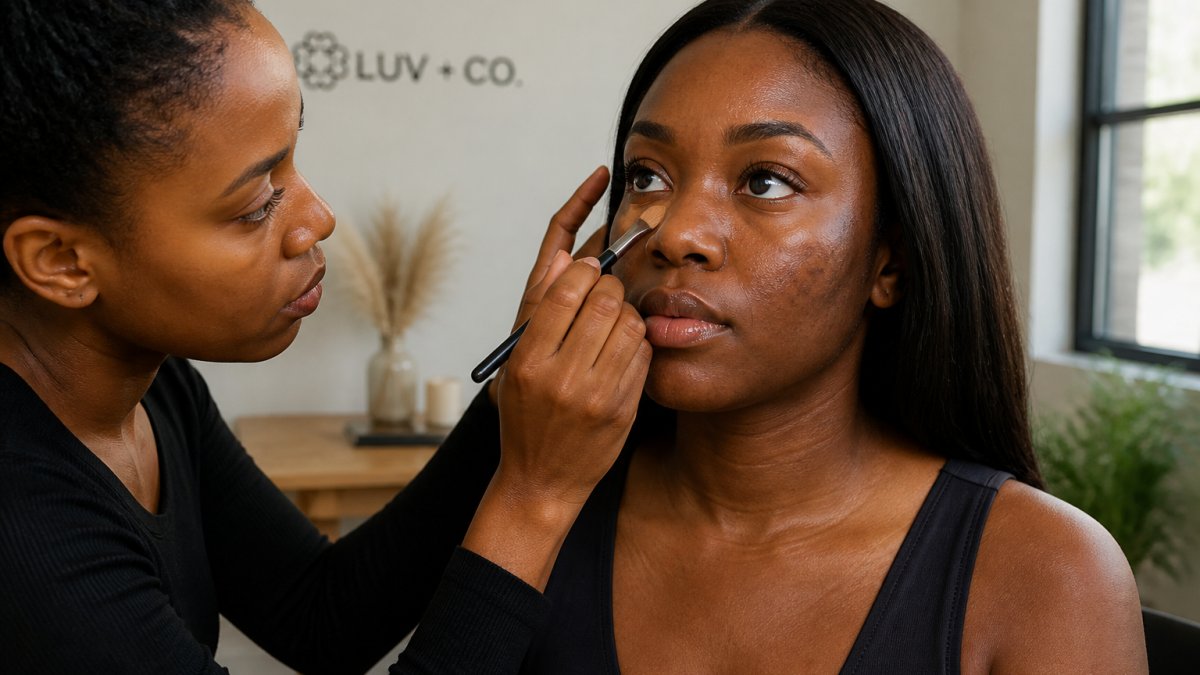
Once your corrector is in place, concealer does the heavy lifting to cover hyperpigmentation dark skin effectively. But concealer for hyperpigmentation on dark skin requires specific qualities: enough coverage to hide discoloration, hydration so it doesn't settle into fine lines, and a shade that matches your actual skin tone without looking ashy.
Selecting Your Concealer Shade for Dark Skin Undertones
This is where shade matching matters enormously. A concealer that's too light will look like a white stripe on your face. One that's too dark or too yellow will look muddy or ashy.
Your concealer should match your skin tone exactly, or be one shade lighter if you're using it to brighten under-eye areas. Pay attention to undertone:
- Warm or golden undertone: Choose a concealer with yellow or golden undertones
- Red or cool undertone: Look for concealers with red or rosy undertones
- Neutral undertone: A balanced concealer works best
- Olive undertone: Seek concealers with subtle green or olive undertones
Many mainstream beauty brands don't offer enough shades for deep skin tones, which is why finding a concealer formulated specifically for melanated skin matters. At LUV + CO., we created the Melanin Match HD Cream Foundation + Concealer with 14 shades focused on deeper complexions.

Test concealer on your jawline in natural light before buying. Swatch it next to your skin and check it from different angles. The right shade disappears into your skin.
Applying Concealer Over Corrected Areas
Use a small, precise brush or your fingertip to apply concealer over the corrected area. Press gently rather than dragging, this helps the concealer adhere to the corrector underneath without disturbing it.
Build coverage in thin layers. Apply concealer, let it set for a few seconds, then apply a second layer if needed.
Blend the edges with a damp beauty sponge or your fingertip. The concealer should transition smoothly into your surrounding skin with no visible line.
For under-eye discoloration, use a shade one step lighter than your skin tone. Apply in a triangular shape from the inner corner down to your cheekbone.
How to Hide Pigmentation Around Mouth with Makeup
Hyperpigmentation around the mouth is stubborn and visible. The skin here is thinner and moves constantly when you talk or eat, which makes coverage tricky.
Melanin Match HD Cream Foundation + Concealer →
Use the same corrector-then-concealer method, but apply with extra precision. Use a small brush rather than your fingertip so you can control exactly where product goes.
Apply corrector only to the darkest areas. Blend it outward with a damp sponge.
Set this area with a light powder to prevent transfer.
Avoid matte liquid lipstick directly over heavily corrected areas. The combination of layers can feel uncomfortable and may crack throughout the day.
How to Cover Dark Spots with Makeup Without Caking
The fear of cakey makeup is real, especially when you're layering corrector, concealer, and foundation over hyperpigmentation. But caking happens when you use too much product or don't blend properly, not because you're covering dark spots.
Layering Makeup for Full Coverage
The key to full coverage without caking is thin, intentional layers. Each layer should be sheer on its own. Together, they build to medium or full coverage.
Start with primer. Apply foundation next, using just enough to even out your skin tone. Then apply corrector only where you have hyperpigmentation. Follow with concealer over the corrected areas. Finally, set with powder.
This order matters. Applying corrector first and building coverage on top prevents you from using excessive amounts of any single product.
Choosing Foundation That Works for Hyperpigmentation
Foundation should provide medium coverage and blend seamlessly over corrected areas. A foundation that's too sheer won't cover hyperpigmentation effectively. One that's too heavy will look obvious and cakey.
For dark skin with hyperpigmentation, a hydrating or satin-finish foundation works better than a matte one. Matte finishes can emphasize texture and make discoloration more visible.
The Melanin Match Liquid Foundation provides medium, buildable coverage with a natural matte finish that doesn't look dry.

Apply foundation with a damp beauty sponge. Bounce the sponge gently over your face rather than dragging it. This helps foundation blend seamlessly and prevents it from looking heavy or patchy.
Setting Your Makeup for All-Day Wear
A setting powder locks everything in place and prevents transfer throughout the day. For dark skin, traditional white translucent powders can leave an ashy cast.
Apply powder only where you need it: T-zone, under eyes, and anywhere you tend to get oily. Use a light hand.
For hyperpigmentation areas specifically, use a very light dusting of powder. Too much powder in these spots can make coverage look chalky or unblended.
A setting spray over powder extends wear time, especially around your mouth where movement causes transfer. Spray lightly and let it dry completely before touching your face.
Common Mistakes to Avoid When Covering Hyperpigmentation
Using the wrong corrector shade: A corrector that doesn't match your skin depth will show.
Skipping primer: Primer smooths your skin texture and gives products something to grip.
Applying corrector and concealer at the same time: Let corrector set before concealer goes on.
Using too much product: More product doesn't mean better coverage.
Choosing concealer by coverage alone: A concealer needs to match your undertone and skin depth, not just provide coverage.
Not blending edges: Hard lines where corrector, concealer, and foundation meet look unnatural and draw attention to problem areas.
Skipping hydration before makeup: Dry skin under makeup emphasizes discoloration and texture.
Covering hyperpigmentation on dark skin is entirely possible with the right technique and products formulated for your needs. The challenge most people face isn't that hyperpigmentation can't be covered, it's that mainstream makeup isn't designed for the specific undertones and depths of melanated skin.

Frequently Asked Questions
How do you choose a concealer shade for dark spots on deep skin?
Match your concealer to your skin tone first, then go one shade lighter for under-eye areas. For dark spots and hyperpigmentation, you may need a shade that's slightly deeper than your natural tone to fully neutralize the discoloration after color correction. Test on a small area to ensure it blends seamlessly without looking ashy or gray. Products like Melanin Match HD Cream Foundation + Concealer are designed with shade ranges specifically for deeper melanated complexions, making it easier to find an accurate match.
What color corrects hyperpigmentation on dark skin?
Orange and peach correctors work best for hyperpigmentation on dark skin because they neutralize the blue and purple undertones in dark spots and discoloration. The color wheel principle applies: complementary colors cancel each other out. Peach tones are ideal for medium to deep skin, while orange works for very deep complexions. Start with a small amount of corrector, blend gently, and layer your concealer on top. This technique prevents the gray or ashy cast that happens when you try to cover dark spots with foundation alone.
How can you cover dark spots without making makeup look heavy?
Build coverage gradually using thin layers rather than applying one thick coat. Start with color correction to neutralize the spot, then apply concealer in small amounts and blend thoroughly. Use a damp beauty sponge to press the product into skin rather than rubbing, which helps it sit naturally. Set with a tinted translucent powder designed for deep skin, traditional white powders can look chalky. Melanin Magic Tinted Translucent Setting Powder is formulated to avoid ashy or gray casts while setting your coverage without heaviness.
How do you keep makeup from irritating sensitive skin when covering hyperpigmentation?
Choose products formulated specifically for melanated, sensitive skin and avoid heavy silicones and fillers. Prep your skin with a hydrating moisturizer and primer to create a smooth base that reduces friction. Mineral-based foundations and concealers tend to be gentler than chemical formulas. Look for talc-free, paraben-free options with hydrating ingredients like hyaluronic acid and jojoba oil. If you have acne-prone skin, ensure your products are non-comedogenic and won't clog pores. Always patch-test new products on a small area first, especially if you've had reactions to other 'clean' products.