

Last Updated: November 12, 2026
Quick Summary
The best foundation formulas for oily skin are usually lighter, matte-finish options, with silicone-based formulas holding up best in humidity and water-based ones suiting cooler, drier days. Matching your foundation base to your primer and sunscreen prevents pilling and midday separation. Test a shade on your jaw before buying a full size.
- Silicone-based foundations resist sweat, humidity and sebum breakthrough better than most alternatives.
- Water-based formulas feel lighter and look more skin-like but can break down faster in heat.
- Keep primer, foundation and sunscreen in the same base family to avoid pilling and patchiness.
- Apply a thin line on your jaw in the morning and check it at noon before committing.
- Blot first, then press setting powder only on shiny areas like the T-zone.
Table of Contents
- How Foundation Formula Affects Oily Skin
- Silicone-Based or Water-Based Foundation for Oily Skin
- Melanin Match Liquid Foundation: Our Top Pick for Oily Skin
- Best Foundation for Oily Skin and Large Pores
- Best Drugstore Foundation for Oily Skin: What to Look For
- Best Foundation for Oily Acne-Prone Skin and Setting It Down
- Start Your Oily-Skin Foundation Match
- Frequently Asked Questions
How Foundation Formula Affects Oily Skin
Choosing the best foundation formulas for oily skin starts with understanding what the formula does on your face. Oily skin produces more sebum, so a heavy, oil-based product can slide, pool in fine lines, or look greasy by midday. Lighter, water-based and matte-finish formulas tend to hold up better for most oily complexions, though the right answer depends on your climate and how much shine you already see.
Formula is only one variable. For more on how melanin and skin type factor into foundation choice, read What Is Melanin Analysis for Makeup? Humidity, skin prep and whether you use a setting powder all shape how long foundation lasts. A humid Southern summer and a dry office in January ask different things of the same product, so think about where and how you wear your makeup before you buy. If you want hands-on help narrowing things down, a Foundation Finder - Match My Makeup session can point you toward a formula and shade that suit your skin and routine.
Silicone-Based or Water-Based Foundation for Oily Skin
The base of a foundation, what carries the pigment, decides how it behaves on oily skin more than the finish name on the label. Silicone-based formulas (look for dimethicone, cyclopentasiloxane, or dimethicone crosspolymer near the top of the ingredient list) form a flexible film that resists sweat, humidity, and sebum breakthrough, which is why so many long-wear and matte products are built on them. Water-based formulas (water listed first, with little or no silicone) feel lighter and look more skin-like, but they can break down faster in heat and tend to separate when layered over rich creams.
The failure most people blame on the foundation is actually a base mismatch. Silicone primer under a water-based foundation, or a heavy oil-based sunscreen under either, can cause pilling, patchiness, and midday separation. A common pattern is to keep the whole routine on one base family: silicone primer with silicone foundation, water-based primer with water-based foundation, and a sunscreen that dries down rather than sitting wet under either.
Finish matters too, but it is secondary to base. A matte or satin finish in either family will control shine better than a dewy finish in the "right" family. For oily skin, the practical shortlist is a silicone-based matte liquid for humidity and long shifts, and a water-based matte or satin liquid for cooler, drier conditions or for skin that feels tight by afternoon.
A simple test: apply a thin line on your jaw in the morning over your normal prep and check it at noon. If it still looks even, the formula and your base layers are compatible on your skin. If it has separated or gone patchy, change the primer or sunscreen before you change the foundation. If the sunscreen is the layer disrupting that even finish, comparing its texture with Enemy Sunscreen can help you decide whether to adjust your base before switching foundations.
The base of a foundation shapes how it behaves on oily skin, so the table below compares the two families at a glance.
| Base | Key ingredients | Behaviour on oily skin |
|---|---|---|
| Silicone-based | Dimethicone, cyclopentasiloxane | Resists sweat, humidity and sebum breakthrough |
| Water-based | Water listed first, little or no silicone | Lighter, more skin-like, can break down in heat |
| Silicone + silicone | Matching primer and foundation | Keeps the routine on one base family |
| Water + water | Matching primer and foundation | Suits cooler, drier conditions |
Melanin Match Liquid Foundation: Our Top Pick for Oily Skin
Melanin Match Liquid Foundation offers buildable, medium coverage. Its shade range and finish are laid out on the product page, so you can check them against your skin before deciding. It offers a natural matte finish without a dry, flat look, which is the balance many oily-skin wearers struggle to find.
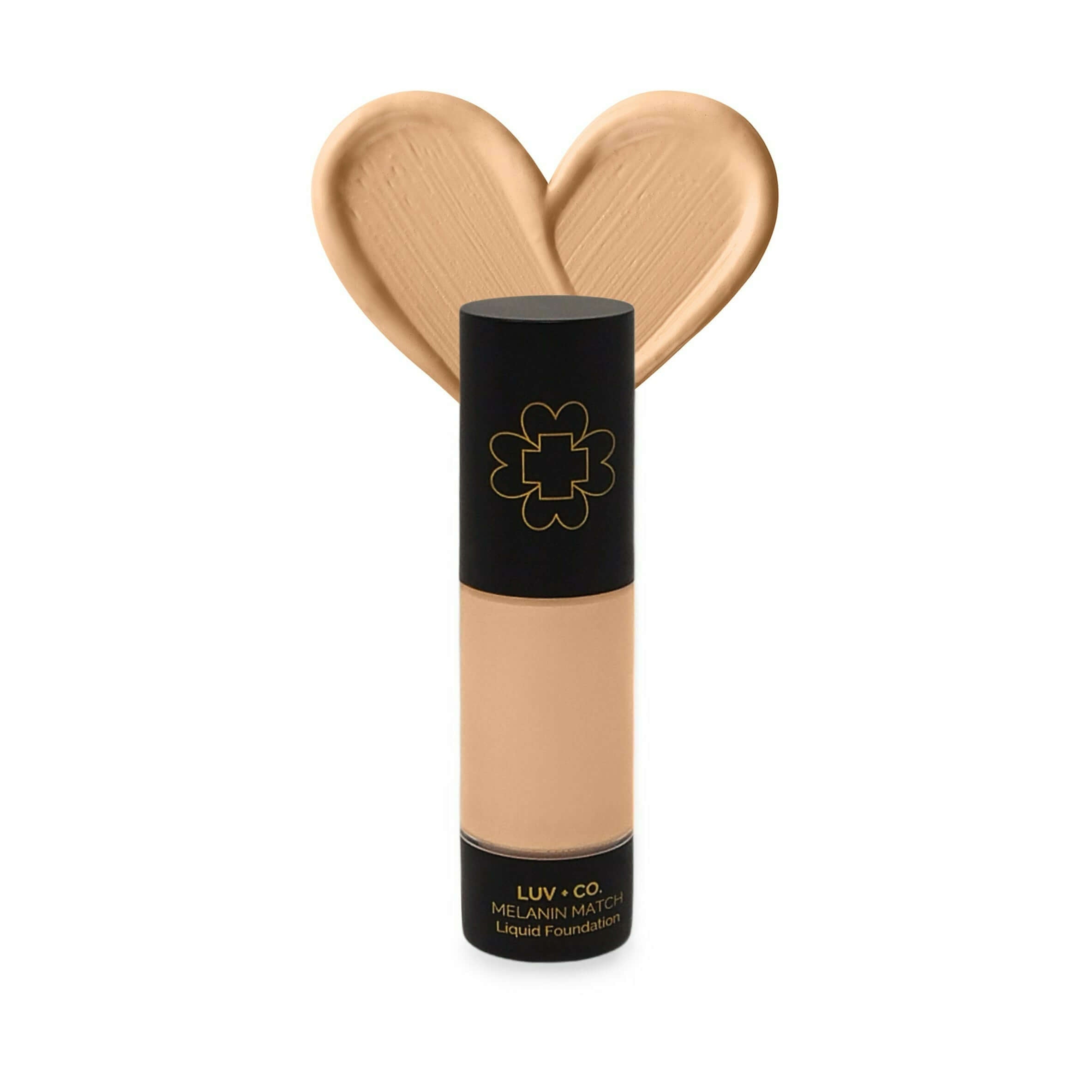
The formula includes sodium hyaluronate and organic jojoba seed oil, and it comes in 16 shades across warm, cool/red, neutral and olive undertones. At $44.00 for a 30 ml airless pump, it sits in the middle of the range for a formula made for melanated skin.
Who It Suits and Where It Falls Short
This foundation is designed to build gradually, so it may not suit anyone who needs full, opaque coverage in one pass.
Best Foundation for Oily Skin and Large Pores
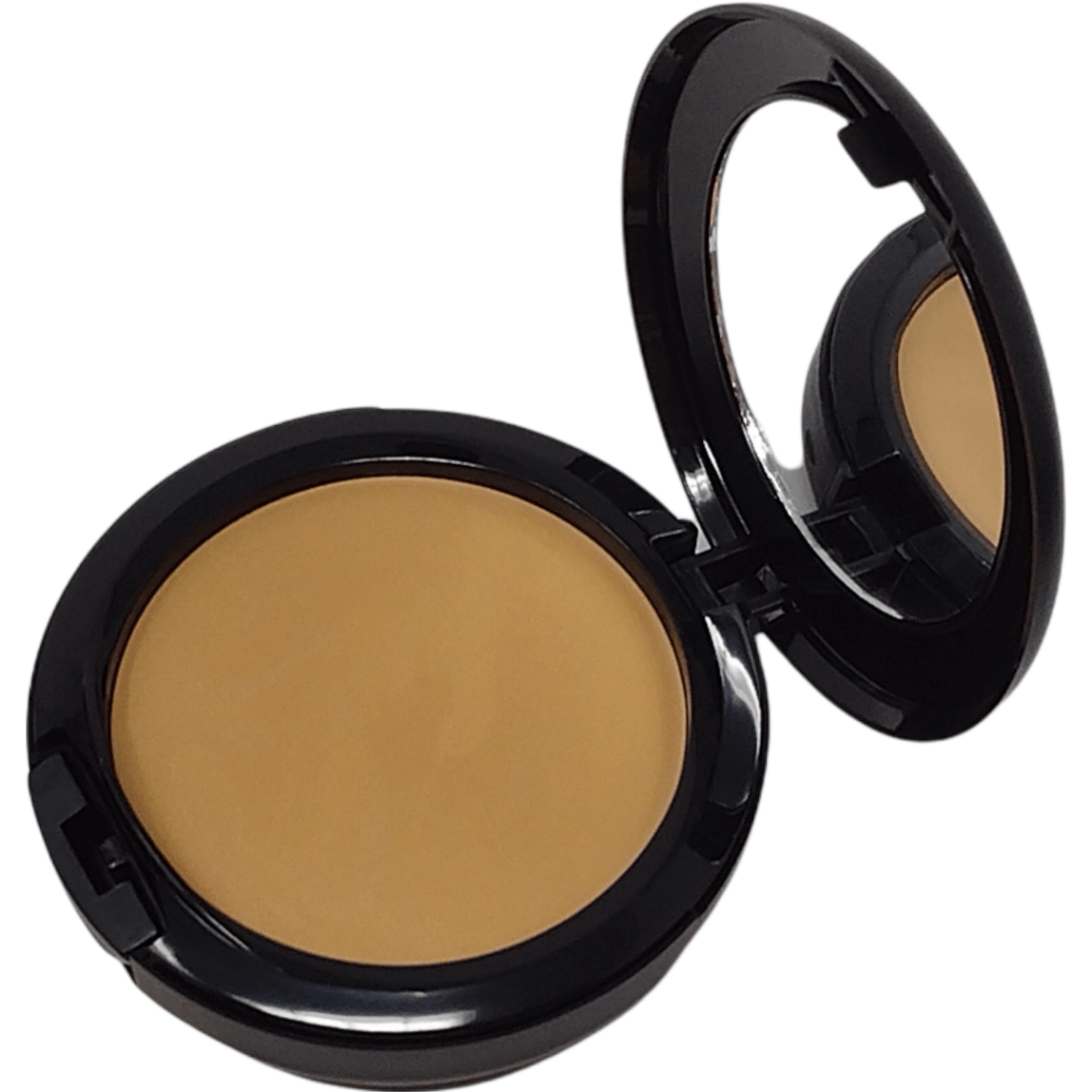
Large pores on oily skin often show up as shine and texture by afternoon. A cream formula with a matte finish can help blur that look, and our Melanin Match HD Cream Foundation + Concealer is built for medium-to-full buildable coverage. It sets to a smooth, natural matte finish and works as an all-over foundation or a targeted concealer.
Because it is concentrated, start with a small amount and build in thin layers. You can compare its coverage and shade options on the Melanin Match HD Cream Foundation + Concealer page. The 14-shade range skews toward deeper complexions, so check the shade guide before you buy.
Best Drugstore Foundation for Oily Skin: What to Look For
Drugstore options can work well on oily skin, but the label alone does not tell you much. Look for terms like oil-free, matte or long-wear, then check the ingredient list for heavy oils if shine is your main concern. Read reviews from people with skin tones and undertones similar to yours.
Ordering samples before committing to a full bottle is one of the simplest ways to avoid that problem.
Best Foundation for Oily Acne-Prone Skin and Setting It Down
Oily, acne-prone skin needs a formula that controls shine without trapping oil or irritating active breakouts, and when you compare the best foundation formulas for oily skin, the setting step matters as much as the foundation itself. Look for oil-free, non-comedogenic labeling, but treat those claims as a starting point rather than a guarantee, "non-comedogenic" is not a regulated standard, and a product can carry the label and still clog your pores. Fragrance is the ingredient most often linked to irritation in this group, so a fragrance-free formula is the safer default if your skin reacts easily. If you use salicylic acid, benzoyl peroxide, or a retinoid, apply it, let it absorb fully, and keep the foundation layer thin; heavy layers over actives are a common cause of flaking and patchiness.
Melanin Magic Tinted Translucent Setting Powder is designed to set foundation and help absorb excess oil on medium to deep melanated skin. Apply a light layer with a powder brush after foundation, pressing rather than sweeping, and focus on the forehead, nose, and chin. Pair it with the Chamomile Face & Eye Primer for Sensitive Skin as a prep step designed for comfortable wear, and if your eyes water or feel gritty by afternoon, our mascara for sensitive eyes keeps the eye area from becoming the reason you skip eye makeup altogether.
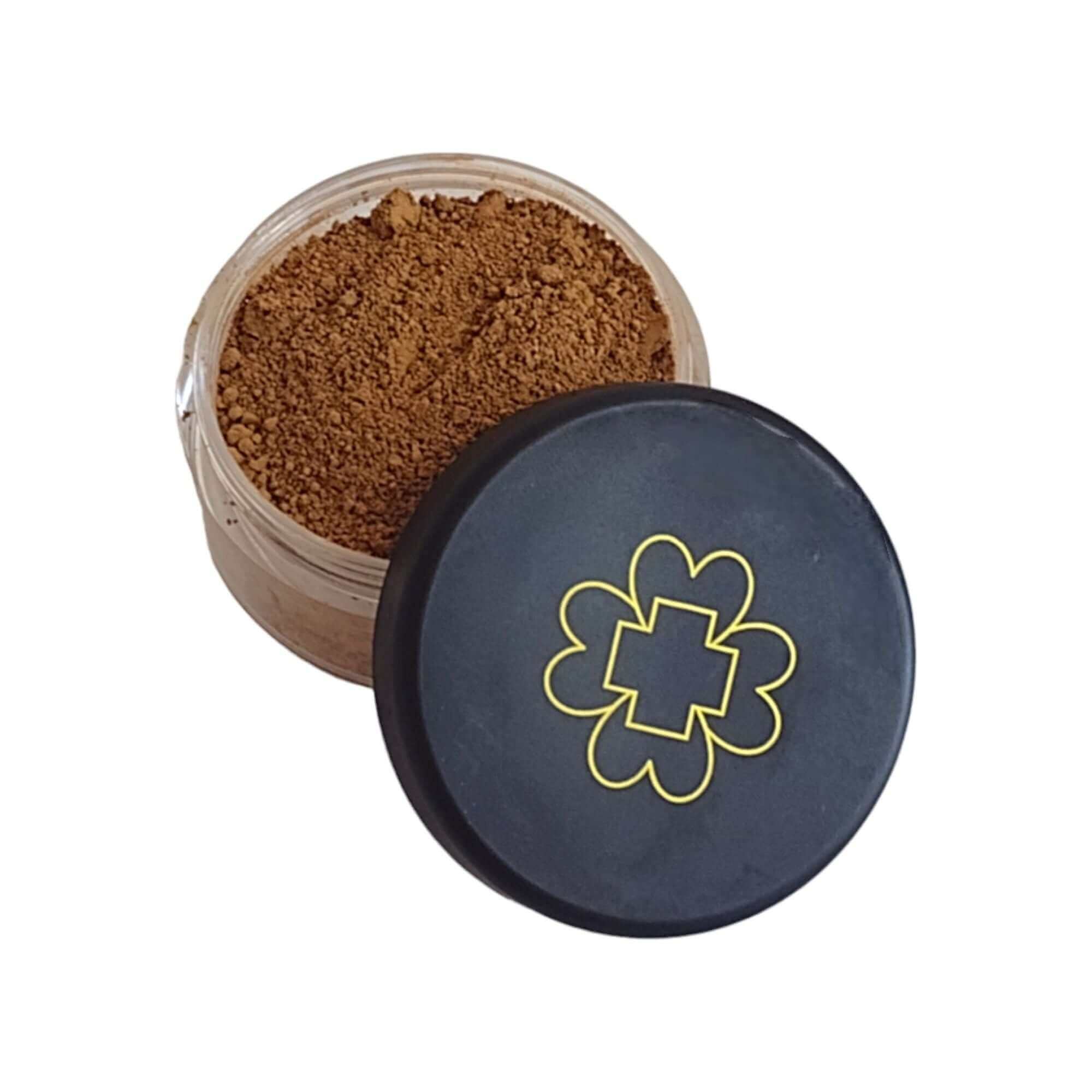
Touch-ups are where oily, acne-prone skin wins or loses the day. Blot first with a tissue or blotting paper before adding powder. Then press a small amount of setting powder only where shine has returned, usually the T-zone. A mattifying primer on the T-zone before foundation buys extra hours, and a setting spray at the end of makeup helps powder melt into skin instead of sitting on top.
Removal deserves the same attention. Skip harsh scrubs on active breakouts and let the cleansers do the work.
Start Your Oily-Skin Foundation Match
Shade matching is a step many people rush. Begin with a sample. Our Foundation & Concealer Samples are $3.50 each, with one per shade per order, so you can test a shade across a full day before buying the full size. If you would rather learn the application in person, a Natural Makeup Application session is another way to see how a formula sits on your skin.
Find your depth first, then your undertone, then choose the formula that fits your oil level and climate. If you are unsure, start with the liquid foundation and build from there. These products are formulated for melanated skin, and a sample run can help you check the match on your own face.
Frequently Asked Questions
Is matte or dewy better for oily skin?
A matte finish is usually the better starting point for oily skin because it limits the shine that builds up over the day and can make foundation slide or look greasy. Melanin Match Liquid Foundation offers a natural matte finish without a dry, flat look, and Melanin Magic Tinted Translucent Setting Powder is designed to help absorb excess oil. Dewy formulas can work on oily skin only when they are light and applied sparingly, since extra shine tends to accentuate oiliness.
What type of base is best for oily skin?
Lightweight, oil-controlling bases work best on oily skin. The Chamomile Face & Eye Primer for Sensitive Skin creates a smoother, conditioned canvas before foundation goes on, which can help makeup apply more evenly. Use a thin layer on clean, moisturized skin, then apply your foundation over it.
How do you keep foundation from looking greasy on oily skin?
Apply a thin, even layer of foundation rather than a heavy one, and build coverage only where you need it. Set the complexion with a light dusting of Melanin Magic Tinted Translucent Setting Powder on areas that shine first, such as the forehead, nose and chin. Blot excess oil before touching up, and avoid stacking more foundation on top of shine, which tends to make the finish look heavier.
