

Last Updated: November 14, 2026
Quick Summary
To cover hyperpigmentation, start with hydrated, primed skin, then neutralize discoloration with a peach, orange, or red corrector before applying a buildable foundation that matches your undertone. Build coverage in thin layers, press each layer in with a damp sponge, and set only where needed with a melanin-friendly powder.
- Let each skincare layer absorb for a few minutes before applying primer and makeup.
- Match water-based primer with water-based foundation and silicone primer with silicone foundation.
- Use a small brush to place concealer on spots, then tap the edges to blend.
- Set cream and liquid products with light powder before humidity or activity.
- Order Foundation & Concealer Samples for $3.50 each to test shades in daylight.
Table of Contents
- Start With Skin Prep That Holds Coverage
- Color Corrector for Dark Spots on Dark Skin
- The Best Concealer to Cover Dark Spots on Face
- The Best Foundation to Cover Dark Spots on Face
- Build Coverage in Thin Layers Instead of One Heavy Pass
- How to Cover Hyperpigmentation With Makeup Without Caking or Creasing
- Set and Lock Everything With a Melanin-Friendly Powder
- Find Your Shade Before You Buy Full Size
- Frequently Asked Questions
Start With Skin Prep That Holds Coverage
Covering hyperpigmentation starts before a single drop of pigment touches your face. Skin pigmentation is commonly discussed in terms of hyperpigmentation and hypopigmentation (Skin Pigmentation Types, Causes and Treatment, A Review). Translation: prep is not a formality. It decides whether your makeup sits smoothly or grabs onto dry patches and uneven texture.
A conditioned, hydrated base is the first step in a complexion routine. Here is the prep that makes the rest of this guide work.
- Cleanse gently, then pat dry without scrubbing
- Apply a hydrating moisturizer and let it absorb for a few minutes
- Smooth on a thin layer of primer to even out the surface
- Give skin a moment to settle before color goes on
A common mistake is skipping moisturizer because you fear shine. Dry skin is what makes concealer look patchy and cakey by noon.
Color Corrector for Dark Spots on Dark Skin
Color correction is the step that neutralizes discoloration before foundation, so you use less product overall. On dark skin, the correct shade matters more than the technique, and so does knowing what kind of discoloration you are covering.
Melasma vs. Dark Spots: Why the Difference Matters
Melasma and post-inflammatory dark spots can look similar, but they behave differently under makeup and call for slightly different approaches.
- Melasma typically appears as larger, symmetrical, blotchy patches, often on the cheeks, forehead, and upper lip, with soft, diffuse edges. Because the pigment is spread out rather than concentrated, a thin, even layer of corrector over the whole patch works better than dotting concealer on individual spots.
- Post-inflammatory dark spots are usually smaller, more defined marks left after breakouts or irritation. They have clearer edges, so targeted spot concealing with a small brush is more effective than broad correction.
Over-correcting melasma with a heavy concealer dot in the center of the patch can create a visible bullseye. For diffuse patches, sheer the corrector outward past the edge of the discoloration so it blends into surrounding skin.
Peach, Orange, or Red: Picking the Right Neutralizer
Peach and orange correctors neutralize brown and blue-toned discoloration, while red correctors address deeper, cooler-toned spots. The general rule from how to cover hyperpigmentation with makeup is that lighter complexions lean toward orange correctors and deeper complexions toward red. In practice, most melanated skin tones land somewhere between peach and orange, depending on depth and undertone.
For a deeper walkthrough, read our guide on how to cover hyperpigmentation on dark skin.
Here is how to choose:
| Spot Type | Corrector Shade | Why It Works |
|---|---|---|
| Brown sun spots | Peach | Softens warm brown without ashing |
| Blue-purple under-eye | Orange | Cancels cool tones |
| Deep melasma patches | Red or burnt orange | Neutralizes intense pigment |
| Diffuse cheek or forehead melasma | Sheer peach-orange, blended past the edge | Evens the whole patch instead of dotting the center |
Apply sparingly with a small brush and tap, never sweep. For melasma, build the corrector in a thin, feathered layer that extends slightly beyond the visible patch; for defined dark spots, keep the product concentrated on the mark and tap the edges to blend.
The Best Concealer to Cover Dark Spots on Face
The best concealer to cover dark spots on face is a concentrated cream formula that matches your undertone, not a lighter shade. Going lighter is the mistake that creates gray, ashy patches on melanated skin.
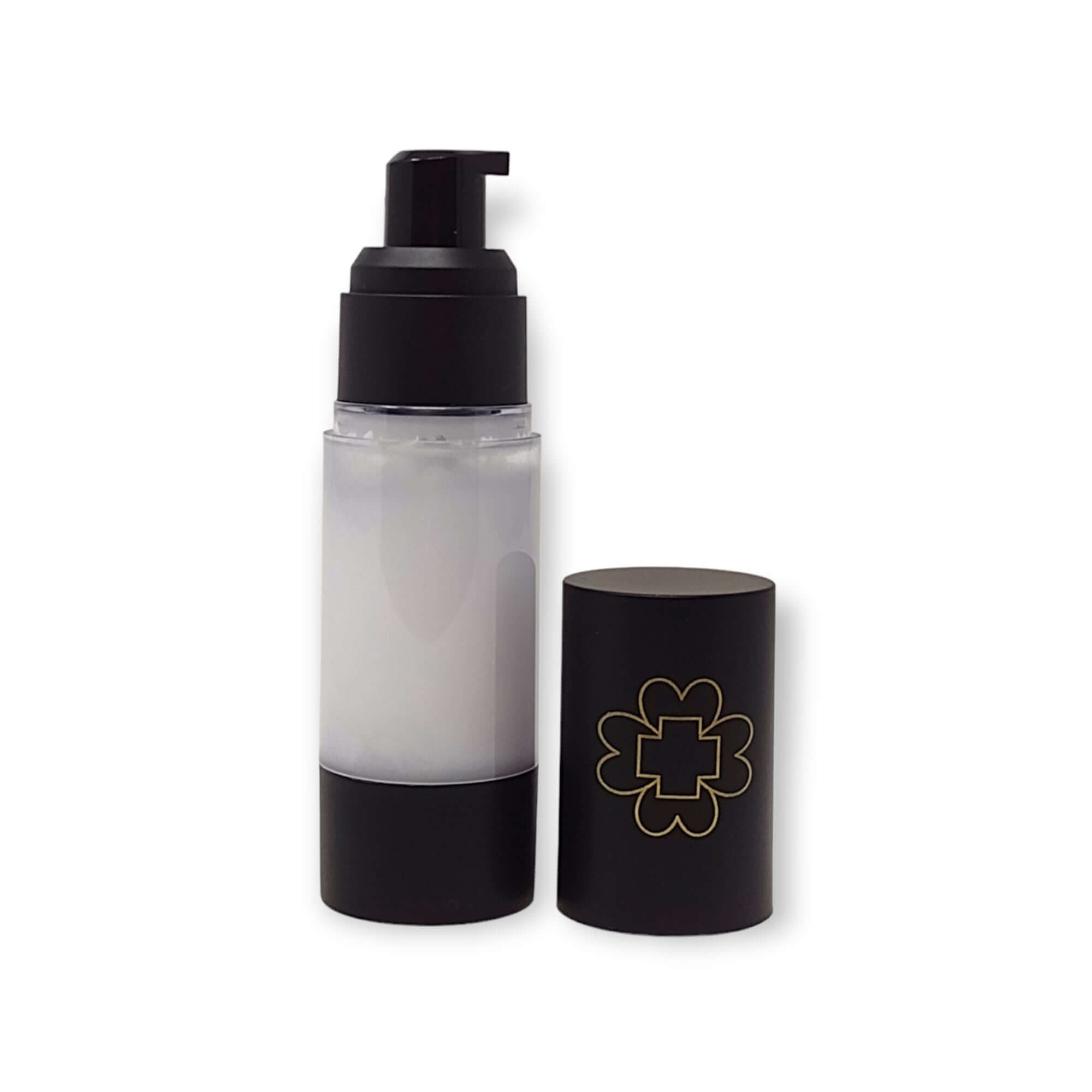
Our top pick is Melanin Match HD Cream Foundation + Concealer. It is a dual-purpose cream designed to help minimize the visible appearance of hyperpigmentation, dark spots and under-eye discoloration, with medium-to-full buildable coverage and a natural matte finish. It is oil-free, talc-free and vegan, and its 14-shade collection skews deeper for medium to deeper complexions.
Targeted Spot Concealing Without Caking
Caking comes from too much product spread too far. Use a concealer brush to place a tiny amount directly on the spot, then tap the edges to blend. Press, do not rub. Build a second thin layer only if the spot still shows through.
The Best Foundation to Cover Dark Spots on Face
The best foundation to cover dark spots on face is a buildable, hydrating formula with mineral pigments that match your undertone. Full coverage matters less than a shade that disappears into your skin.
Melanin Match Liquid Foundation fits that brief. It offers medium, buildable coverage with sodium hyaluronate and organic jojoba seed oil, so skin stays hydrated under the pigment. It comes in 16 shades across warm, cool/red, neutral, and olive undertones, and it is talc-free, paraben-free, and 70% organic.
If you want more concentrated coverage, the HD Cream formula is the heavier option.
Build Coverage in Thin Layers Instead of One Heavy Pass
Thin layers beat one thick pass every time. Heavy product is what creases, slides, and looks flat by afternoon.
Work in this order:
- Apply a light layer of foundation across the whole face
- Add a second thin layer only on uneven areas
- Spot-conceal dark spots with a small amount
- Press each layer in with a damp sponge before adding more
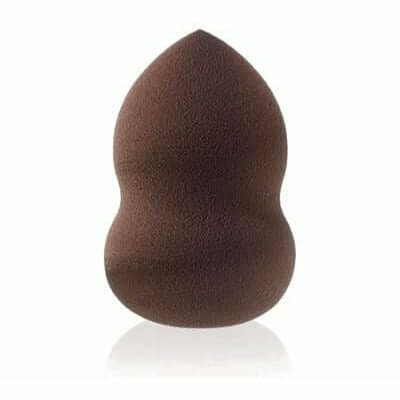
Our Makeup Blending Sponge, $15, is latex-free and presses product into the skin rather than wiping it across.
How to Cover Hyperpigmentation With Makeup Without Caking or Creasing
To cover hyperpigmentation with makeup without caking or creasing, control the amount of product, match the formula to your skin texture, and manage how your skincare layers interact with your makeup. Most caking is a texture problem disguised as a coverage problem, and a lot of it starts before the foundation ever touches your face.
Texture-Specific Fixes for Dry, Oily, and Combination Skin
- Dry skin: moisturize well, use a hydrating liquid foundation, and avoid powder in dry zones
- Oily skin: prime, use thin layers, and set only the T-zone with a light powder
- Combination skin: treat zones separately, hydrating on cheeks and setting the center
Raised vs. Flat Hyperpigmentation
Not all dark spots behave the same under makeup, and the texture matters as much as the color.
- Flat discoloration (most sun spots and melasma) sits level with the skin and covers cleanly with color corrector plus a thin concealer layer.
- Raised or textured spots (common with post-inflammatory marks that are still healing) catch light and powder differently. A heavy concealer layer emphasizes the bump instead of hiding it. Use a lighter, more flexible concealer and press, never drag, so the product sits around the texture rather than on top of it.
Watch out: powdering a raised spot heavily makes it look more prominent, not less, because the powder settles on the high point and catches light.
Ingredient Compatibility: Why Your Makeup Pills
One of the most common coverage failures has nothing to do with your concealer. It is the interaction between your skincare and your makeup.
A common pattern:
- Let each skincare layer absorb fully, a few minutes between serum and primer, before applying makeup
- Match bases where you can: water-based primer under water-based foundation, silicone primer under silicone foundation
- If you use a vitamin C serum in the morning, apply it first and give it time; don't layer a heavy occlusive moisturizer directly over it right before foundation
- If pilling starts, stop blending. Wiping at pills makes it worse. Lift the product off with a damp sponge and restart with less.
Long-Wear in Humidity and During Activity
Coverage that looks flawless at 8 a.m. can slide by early afternoon in heat or during a workout. The fix is layering discipline, not more product.
- Set cream and liquid products with a light powder before humidity or activity, focusing on the T-zone and any areas where you tend to sweat
- Keep blotting papers on hand; blot before you re-powder, or you will push oil and product around
- For active days, choose a natural-matte, oil-free cream or liquid over a dewy formula, since dewy finishes break down faster with sweat
- Carry a small concealer and a damp sponge for touch-ups on spots rather than re-applying foundation across the whole face
Watch out: re-powdering over unblotted shine is the fastest way to create a patchy, cakey finish mid-day.
Layering Without Caking
Thin layers beat one thick pass every time. Heavy product is what creases, slides, and looks flat by afternoon. Work in this order: a light foundation layer across the face, a second thin layer only on uneven areas, spot-conceal with a small amount, and press each layer in with a damp sponge before adding more. Our Makeup Blending Sponge, $15, is latex-free and presses product into the skin rather than wiping it across.
Set and Lock Everything With a Melanin-Friendly Powder
Traditional translucent powders can leave a chalky, gray cast on deeper complexions. That is why the setting step deserves its own product, not whatever is in the drawer.
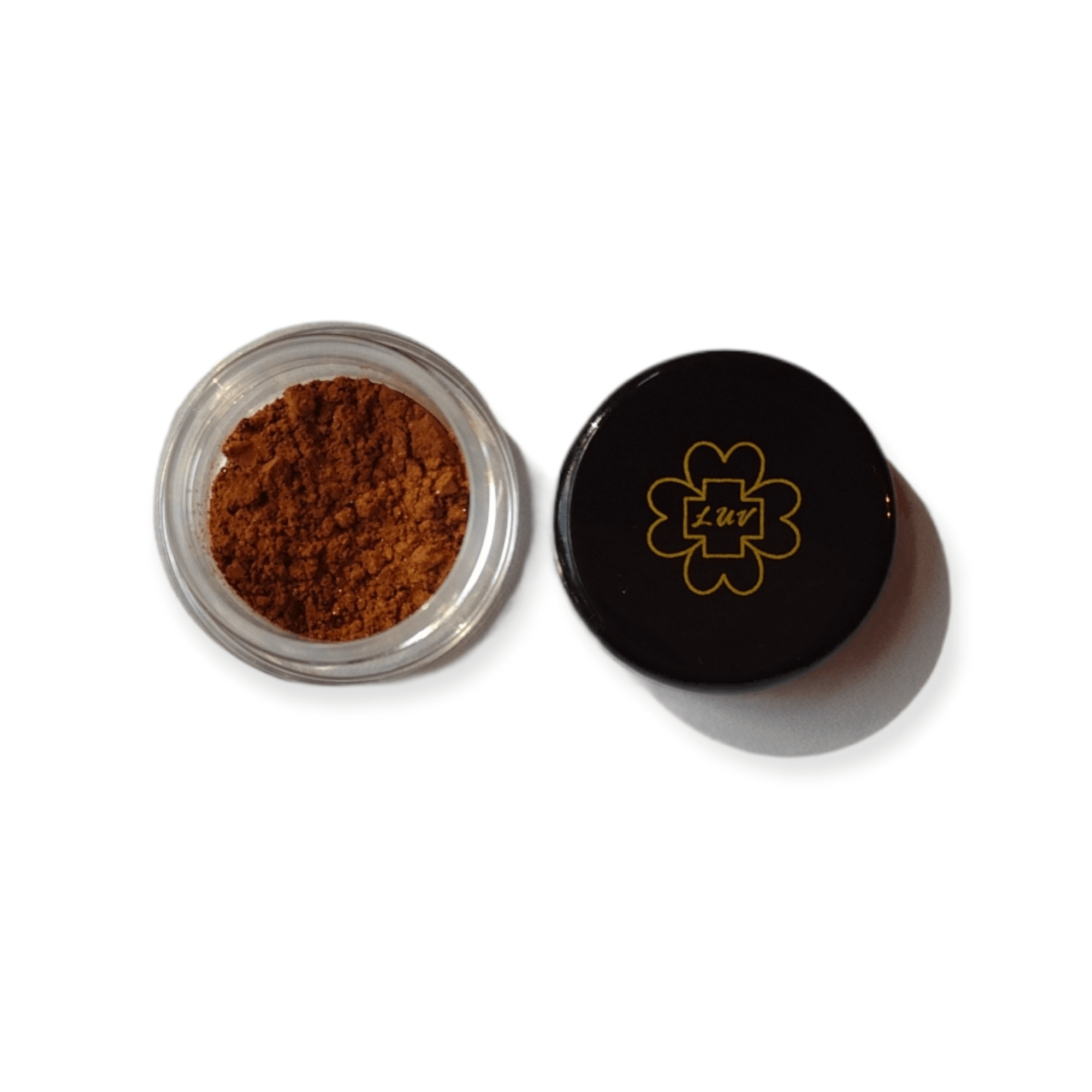
Melanin Magic Tinted Translucent Setting Powder is a deeper-toned semi-translucent mineral powder made for medium to deep skin. It absorbs excess oil and gives foundation a soft, airbrushed finish without masking your complexion.
Press a small amount into the T-zone with a powder brush.
Find Your Shade Before You Buy Full Size
Shade matching is where most routines succeed or fail. Order Foundation & Concealer Samples for $3.50 each and test in daylight before committing to a full size.
If you are near our studio, book a Melanin Analysis appointment for an in-person match. Online, our Foundation Finder walks you through depth and undertone.
A finished look still needs the details. Our Natural Lift Mascara is designed for sensitive eyes, and our dye-free moisturizing lipstick adds color with a moisturizing formula.
Covering hyperpigmentation well comes down to prep, the right corrector, and thin layers of formula built for melanated skin. LUV + CO. makes that easier with mineral-based pigments, talc-free formulas, and shades developed by a beauty product development PhD. Start with the Melanin Match HD Cream Foundation + Concealer, set with Melanin Magic powder, and sample before you commit.
Frequently Asked Questions
How do you cover hyperpigmentation with makeup step by step?
Start with a hydrating primer, then tap a peach or orange color corrector only over the darkest spots. Follow with a medium-to-full buildable foundation, then a concentrated concealer pressed onto remaining discoloration. Blend the edges, not the center of the spot. Set with a tinted translucent powder made for deeper skin. Thin layers beat one heavy pass every time.
Should you use color corrector or concealer to cover hyperpigmentation?
Both, but for different jobs. A color corrector neutralizes the undertone in the spot, which concealer alone cannot do. Concealer then matches your skin and hides the corrected color. Skip the corrector on light brown spots and go straight to concealer; use it on deep or blue-brown discoloration where concealer alone looks gray.
How do you choose a concealer shade for dark spots on deeper skin tones?
Match the concealer to your skin, not to the spot. A shade too light creates a gray cast over hyperpigmentation. Look for a formula with warm, neutral, or red undertones that mirror yours, and test it on the jawline in daylight. If you are unsure, order samples first so you are not guessing on a full-size purchase.
How do you keep makeup from looking cakey over hyperpigmentation?
Prep with moisture, apply thin layers, and press rather than sweep. Set only the zones that need it, like the T-zone and under the eyes, with a light hand. If a spot still shows, add one more thin layer instead of a thick one.
