

Table of Contents
- What Non Toxic Skincare for Acne-Prone Skin Actually Means
- 1. Gentle Micellar Water Cleanser & Makeup Remover: The $21 First Cleanse
- 2. Vitamin C Cleansing Oil: Best for Makeup and Sunscreen Days
- 3. Green Tea Hydrating Face Toner: Niacinamide Without the Sting
- 4. Hydrating Charcoal Face Mask: Oil Control That Doesn't Tighten
- 5. The Bundles: Which Set Fits Your Routine
- How to Build a Natural Skincare Routine for Acne-Prone Skin
- Skincare Ingredients for Sensitive Acne-Prone Skin: What Helps, What Backfires
- Frequently Asked Questions
Last Updated: October 20, 2026
What Non Toxic Skincare for Acne-Prone Skin Actually Means
Non toxic skincare for acne-prone skin is a routine built from ingredients chosen for low irritation risk and clear function, not from a marketing label.
That is the first thing most shoppers get wrong. The FDA's guidance on cosmetics labeling and safety makes clear that cosmetic firms are responsible for substantiating safety, but no government body pre-approves the word "non-toxic" on a label.
Hazard Is Not Risk
The most useful distinction for acne-prone shoppers is between hazard and risk. A hazard is an ingredient's potential to cause harm under some condition; risk is the likelihood of harm at the dose and exposure your skin actually gets. Many ingredients flagged on "free-from" lists are hazards at high concentrations or in industrial settings but pose little risk in a rinse-off cleanser at 1%.
The Ingredient Test That Beats the Label
Read the list in this order: cleansing agents, then actives, then oils and butters.
- Cleansing agents: mild surfactants and micellar systems lift oil without harsh scrubbing. Harsh astringents and high-alcohol toners can strip skin and trigger rebound oil.
- Actives: niacinamide, mandelic acid, phytic acid, and oil-soluble vitamin C derivatives support tone and texture at supportive levels. Established over-the-counter acne actives, benzoyl peroxide and salicylic acid, have the deepest evidence base, but they demand gradual introduction on sensitive skin.
- Fragrance and essential oils: fragrance is a leading cause of contact allergy in cosmetics (What is New in Contact Allergy To Cosmetics for Physicians, Cosmetologists, and Cosmetic...). For reactive skin, fragrance-free beats "naturally fragranced" almost every time.
Match the Product to Your Acne Type, and Know When to Escalate
Acne is not one condition, and the right routine depends on which type you have.

- Comedonal acne (clogged pores, blackheads, whiteheads): gentle cleansing plus a weekly clarifying treatment and a non-comedogenic moisturizer. Salicylic acid is the best-studied over-the-counter option for unclogging pores.
- Inflammatory acne (red, tender papules and pustules): keep the routine simple, avoid physical scrubbing, and consider benzoyl peroxide at a low concentration, introduced slowly. Patch test anything new.
- Oily with shine by midday: a hydrating toner and a charcoal mask used weekly help manage excess oil without over-drying.
A practical rule: if you have tried a consistent over-the-counter routine for six to eight weeks and see no improvement, or if breakouts are leaving marks or scars, escalate to a clinician rather than adding more products.
If you are pregnant, nursing, or using prescription acne medication, talk to your clinician before adding new actives. And for makeup days, our mascara for sensitive eyes and dye-free moisturizing lipstick are formulated to finish the routine without reintroducing irritation around the eyes and lips.
1. Gentle Micellar Water Cleanser & Makeup Remover: The $21 First Cleanse
Our pick for the gentlest possible start. This water-based micellar cleanser lifts makeup, surface oil, and daily debris without aggressive rubbing, using mild cleansing agents and glycerin to keep skin feeling comfortable rather than tight.

It works two ways: as a quick standalone cleanse on light-makeup days, or as the first step before an oil cleanser.
The 4 oz bottle is $21.00. Where it falls short: it will not dissolve heavy waterproof formulas on its own, so pair it with the cleansing oil below on full-coverage days.
2. Vitamin C Cleansing Oil: Best for Makeup and Sunscreen Days
Sunscreen and long-wear makeup need oil to break down properly, and this emulsifying cleanser does that job without leaving skin stripped.
Massage it onto dry skin with dry hands, add a little water to emulsify, then rinse. Skin feels soft afterward, not squeaky.
One honest caveat: it contains citrus-derived essential oils, including limonene and linalool. The 1 oz bottle is $36.00.
3. Green Tea Hydrating Face Toner: Niacinamide Without the Sting
Most toners marketed to oily skin are astringents in disguise, and that is exactly the wrong move for acne-prone skin. This one goes the other direction: niacinamide is the second listed ingredient, supported by aloe, green tea, betaine, sodium PCA, and amino acids.

The result is hydration after cleansing plus support for the look of uneven texture and enlarged-looking pores. Mandelic and phytic acids appear at supportive levels, complementing the toner's smoothing benefits without turning it into a treatment product.
Mist it after cleansing, or use it as a midday refresh when skin feels warm. The 1 oz bottle is $32.00.
Niacinamide sits near the top of this ingredient list, not at trace level. That is rare in a hydrating mist, and it is the reason this toner earns a permanent spot rather than a rotation.
4. Hydrating Charcoal Face Mask: Oil Control That Doesn't Tighten
Charcoal masks usually mean one thing: a tight, dry, cracked finish. This one is built to avoid that.
It is 85% organic, vegan, and free of parabens and phthalates, with rooibos and green tea extracts plus niacinamide and a vitamin C ester.
Sensitive-skin note: the formula contains organic alcohol and white willow bark extract, so patch test if your skin is highly reactive. The jar is $42.00.
5. The Bundles: Which Set Fits Your Routine
Buying singles works, but bundles cut the guesswork. Here is how the LUVSKIN sets compare.
Gentle Micellar Water Cleanser & Makeup Remover →
| Set | Price | What's Inside | Best For |
|---|---|---|---|
| Sensitive Skin 6-Piece Collection + Travel Bag | $149.00 | Micellar water, toner, face oil, jojoba scrub, cleansing brush, travel bag | Reactive skin that needs the lightest cleanse |
| Gentle Exfoliation 4-Piece Set | $152.00 | Cleansing oil, toner, face oil, jojoba scrub | Smoother texture with one weekly exfoliation step |
| Complete 6-Piece Skincare Set | $229.00 | Both cleansers, toner, face oil, jojoba scrub, charcoal mask | A full double-cleanse plus two weekly treatments |
If you are unsure, start with the Sensitive Skin collection. It skips the oil cleanser, which keeps the routine lighter while your skin adjusts. Add the Complete set once you know how your skin responds to weekly treatments.
How to Build a Natural Skincare Routine for Acne-Prone Skin
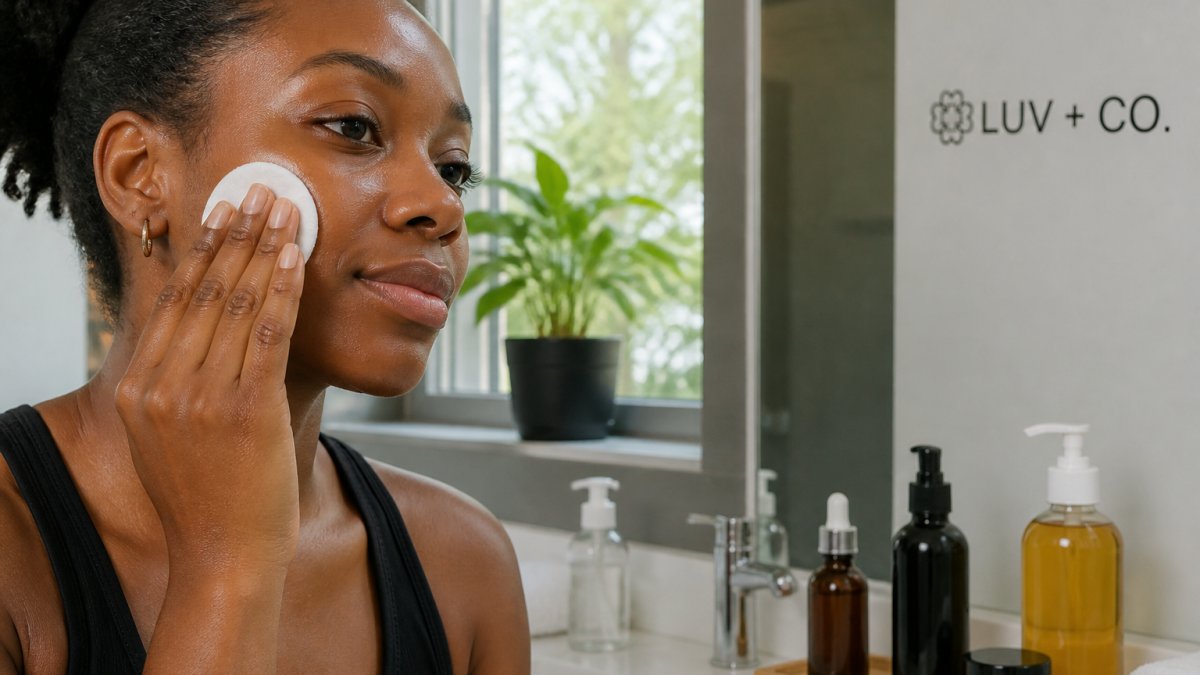
A natural skincare routine for acne-prone skin works best when it stays short and consistent. Four steps, twice a day, plus two weekly treatments is enough for most people, but the sequence matters less than the criteria you use to pick each product.
The Four-Step Sequence
- Cleanse. Micellar water in the morning; micellar water plus cleansing oil at night if you wore makeup or sunscreen.
- Tone. Mist the green tea toner while skin is still damp.
- Moisturize. Press a few drops of face oil into the face and neck, or use your preferred moisturizer.
- Treat weekly. Jojoba bead scrub once a week, charcoal mask on a separate day.
- Protect. Sunscreen every morning. Post-acne marks darken fast without it.
Product-Selection Criteria
Rather than shopping by brand or label, screen each product against a short checklist:
- Cleanser: fragrance-free, low-foam, pH-balanced, and labeled non-comedogenic. Avoid high-alcohol astringents and gritty scrubs.
- Treatment: one active at a time, salicylic acid for clogged pores, benzoyl peroxide for inflammatory breakouts, or a gentle mandelic-acid product for sensitive skin. Do not stack multiple actives in the same step.
- Moisturizer: non-comedogenic and fragrance-free. Gel or light-lotion textures suit oily skin; squalane and jojoba suit drier or reactive skin.
Patch Test Before You Commit
A patch test is the cheapest insurance against a setback. Apply a small amount of the new product to the inner forearm or behind the ear, twice a day for two to three days. If redness, itching, or swelling appears, stop. For leave-on products, repeat the test on a small area of the jawline before applying to the full face.
Introduce One Active at a Time
A gradual schedule reduces irritation, especially on sensitive skin:
- Weeks 1-2: use the new active two nights per week.
- Weeks 3-4: increase to three nights per week if skin is comfortable.
- Week 5 onward: move to every other night, then nightly only if tolerated.
Keep the rest of the routine boring during this window, no new masks, scrubs, or oils, so you can tell what is working and what is not.
Introduce one new product every two weeks. If a breakout appears, you will know exactly which product caused it, and you will not have to rebuild the whole routine.
When Self-Care Is Not Enough
If you have followed a consistent routine for six to eight weeks without improvement, or if you have deep, painful lumps or scarring, see a dermatologist or other qualified clinician. Pregnancy, nursing, and prescription acne medications also warrant a clinician conversation before you add new actives.
Skincare Ingredients for Sensitive Acne-Prone Skin: What Helps, What Backfires
Skincare ingredients for sensitive acne-prone skin fall into two groups: those that calm and support the barrier, and those that fight acne directly but demand caution.
What helps:
- Niacinamide supports a more even-looking complexion without heaviness.
- Mandelic acid is a larger-molecule acid that suits sensitive skin better than harsher options.
- Squalane and jojoba moisturize without a greasy finish.
What backfires:
- High-alcohol astringents strip skin and trigger rebound oil.
- Aggressive physical scrubs create micro-tears and irritation.
- Stacking multiple actives at once overwhelms a sensitive barrier.
One more piece of context worth knowing: the American Academy of Dermatology's acne care guidance notes that acne treatments take time, often six to eight weeks, before improvement shows.
If you are pregnant, nursing, or using prescription acne medication, talk to your clinician before adding new actives. And for makeup days, our mascara for sensitive eyes and dye-free moisturizing lipstick are formulated to finish the routine without reintroducing irritation around the eyes and lips.
For personalized help, book a 30-minute skincare consultation at our McDonough studio, where we walk through your current routine and patch test products before you commit. If you would rather learn the why behind the steps, our LUV Skin School session walks through ingredient reading and routine building in person.
Building a non toxic skincare routine for acne-prone skin is not about finding the perfect single product.
Frequently Asked Questions
Is non toxic skincare safe for acne-prone skin?
It can be, but the label alone does not guarantee it. What matters is whether the formula avoids known irritants and pore-clogging oils while still doing the job: cleansing gently, supporting hydration, and delivering actives like niacinamide or mandelic acid at levels your skin tolerates. Patch test any new product on your jawline for a few days before using it across your whole face, and introduce one product at a time so you can tell what caused a reaction if one shows up.
What skincare ingredients are best for sensitive acne-prone skin?
Look for niacinamide, which supports a more even-looking complexion without heaviness, plus humectants like glycerin, betaine, and sodium PCA that hydrate without adding oil. Mandelic and phytic acids appear at supportive levels in some toners and are gentler options to explore before stronger acids. Squalane and jojoba-based emollients condition skin without the heaviness of coconut oil or cocoa butter. Avoid denatured alcohol in high positions, added fragrance if you react to it, and anything that leaves skin tight after cleansing.
Can natural skincare products help with acne?
Some plant-derived ingredients earn their place: green tea and aloe soothe, niacinamide brightens the look of uneven tone, and willow bark extract appears in clarifying formulas. But natural does not automatically mean gentle. Essential oils, including citrus oils, can irritate sensitive skin, and some botanical extracts trigger reactions in people who react to fragrance. Judge each formula by its full ingredient list and how your skin responds, not by how plant-based the marketing sounds.
What is a simple skincare routine for acne-prone skin?
Keep it to four steps at night: a gentle cleanser such as a micellar water or emulsifying cleansing oil, a hydrating toner with niacinamide, a lightweight face oil or moisturizer, and a weekly treatment used sparingly. In the morning, rinse, tone, moisturize, and apply sunscreen. Add exfoliation about once a week, not daily, and separate treatment steps rather than stacking them. If your skin feels tight or stings after cleansing, the cleanser is too harsh, not the acne.
Can makeup cause breakouts on acne-prone skin?
It can when the formula is heavy, occlusive, or hard to remove completely. The bigger culprit is often incomplete removal: leftover foundation and sunscreen sit in pores overnight. Double cleansing with a micellar water followed by an emulsifying cleansing oil lifts both layers without harsh rubbing. Choose formulas labeled non-comedogenic where possible, and give skin a makeup-free day each week to see how it responds.