
Table of Contents
- What Does an Independent Beauty Consultant Actually Do?
- How to Start a Makeup Business as an Independent Consultant
- Beauty Consultant Startup Costs: What You'll Really Spend
- Salary and Earning Potential: How Commission Works
- Marketing Strategies for Beauty Consultants That Bring Clients
- Tax and Legal Obligations for Independent Contractors
- Common Mistakes New Consultants Make and How to Avoid Them
- Is This Career Right for You? Start With LUV + CO.
- Frequently Asked Questions
Last Updated: September 7, 2026
What Does an Independent Beauty Consultant Actually Do?
An independent beauty consultant is a self-employed sales representative who partners with a cosmetics brand to sell products directly to customers rather than working in a retail store. Instead of earning a fixed hourly wage, you purchase products at a wholesale discount and sell them at the suggested retail price, keeping the profit margin as your income. This direct sales model puts you in control of your schedule, your client base, and ultimately your earnings potential.
The day-to-day reality is far more varied than most job descriptions suggest. You might spend your morning doing a product demonstration at a client's home, your afternoon responding to messages and managing inventory, and your evening hosting a virtual skincare education session. Customer acquisition, relationship building, and repeat sales are the engine of this business, not just handing over a lipstick and taking payment.
The beauty industry rewards those who treat consulting as a real business. At LUV + CO., we built our independent consultant program around the belief that you should never have to choose between healthy skin and beautiful makeup, and that same philosophy applies to how you build your income. This guide walks you through exactly how to start a makeup business, what it costs, how commission works, and the marketing strategies that actually bring clients in.
How to Start a Makeup Business as an Independent Consultant
Starting a makeup business as an independent beauty consultant follows a clear path: choose a brand that aligns with your values, complete their training, and set up a legal business structure.
Step 1: Choose Your Brand Partnership
Your brand partnership is the single most important decision you will make. You are not just choosing products to sell; you are choosing the formulas you will defend, the shade range you can honestly serve, and the company culture you will represent. Look for a brand that solves a real problem for a specific audience rather than one that tries to be everything to everyone. If you are a Black woman with sensitive skin, partnering with a brand that understands melanated skin, hyperpigmentation, and shade matching is a competitive advantage you cannot fake.
Step 2: Complete Training and Certification
Most reputable direct sales brands require you to complete training before you start selling. This education typically covers product knowledge, ingredients, application techniques, and how to conduct a consultation. The best programs go deeper, teaching you how to match shades accurately and address skin concerns with confidence. For example, LUV + CO. consultants complete virtual training that covers our proprietary Melanin Analysis system, because standard color analysis was never designed for Black women.
Step 3: Set Up Your Business Structure
Before you make your first sale, you need to decide how your business will operate legally. Most independent beauty consultants start as sole proprietors, which is the simplest structure and requires no formal registration beyond obtaining any necessary local business licenses. As your income grows, you may consider forming an LLC to separate your personal assets from your business liabilities. You will also need to apply for an Employer Identification Number from the IRS, which you can do online at no cost.
Beauty Consultant Startup Costs: What You'll Really Spend
The startup costs for becoming an independent beauty consultant vary dramatically by brand, ranging from a small enrollment fee to several hundred dollars for a starter kit. A common approach among direct sales brands is to charge a modest enrollment fee plus the cost of initial inventory. At LUV + CO., the path is straightforward: a $27.00 enrollment fee covers your access to the private consultant group and new consultant virtual training, and you build your inventory through product collections rather than being forced into a massive opening order.

You should budget for more than just inventory. A realistic startup budget includes your enrollment fee, a starter product collection, basic marketing materials, and a small amount of product for your own use so you can speak authentically about what you sell. For a serious business builder who wants a full range of complexion shades to cover, contour, and match, a comprehensive collection costs around $649.00, but you can start smaller and grow your inventory as your client base expands.
Salary and Earning Potential: How Commission Works
Your earning potential as an independent beauty consultant depends entirely on your profit margin and sales volume. In the direct sales model, you buy products at a wholesale price, typically 20 percent to 50 percent below the suggested retail price, and you keep the difference as your commission. This means your income is not capped by an hourly rate, but it is also not guaranteed; you only earn when you sell.
Realistic earnings depend heavily on your effort and approach. A consultant treating this as a side income might sell a few hundred dollars per month, while a full-time consultant who builds a strong client base and team can generate a substantial revenue stream. professional makeup training.
Commission Structures Compared
| Structure | How It Works | Best For |
|---|---|---|
| Retail profit | Buy wholesale, sell retail, keep the difference | New consultants learning the business |
| Tiered commission | Higher volume unlocks higher discounts | Building a consistent sales habit |
| Team building | Earn a percentage of your recruits' sales | Experienced consultants seeking use |
At LUV + CO., consultants purchase products at a wholesale discount and sell at the suggested retail price, keeping the profit as their income. There is also a $7.00 monthly technology fee and a $35.00 annual renewal fee to maintain your active consultant status.

Marketing Strategies for Beauty Consultants That Bring Clients
Marketing as an independent beauty consultant is about building trust, not just broadcasting product photos. The most effective strategy is to position yourself as an educator who solves specific skin concerns, whether that is covering hyperpigmentation without irritation or finding a foundation shade that does not leave a gray cast. Clients buy from people they trust to understand their needs.
Digital Marketing Essentials
Your digital presence is your storefront. Start by claiming your handle on Instagram and TikTok, then post consistently about your products, your process, and your client results. Social media is where customer acquisition happens for most modern consultants, so treat your content calendar as seriously as you would a retail display. Short video demonstrations of products, before-and-after transformations, and honest ingredient education perform well because they show rather than tell.
In-Person Selling and Product Demonstrations
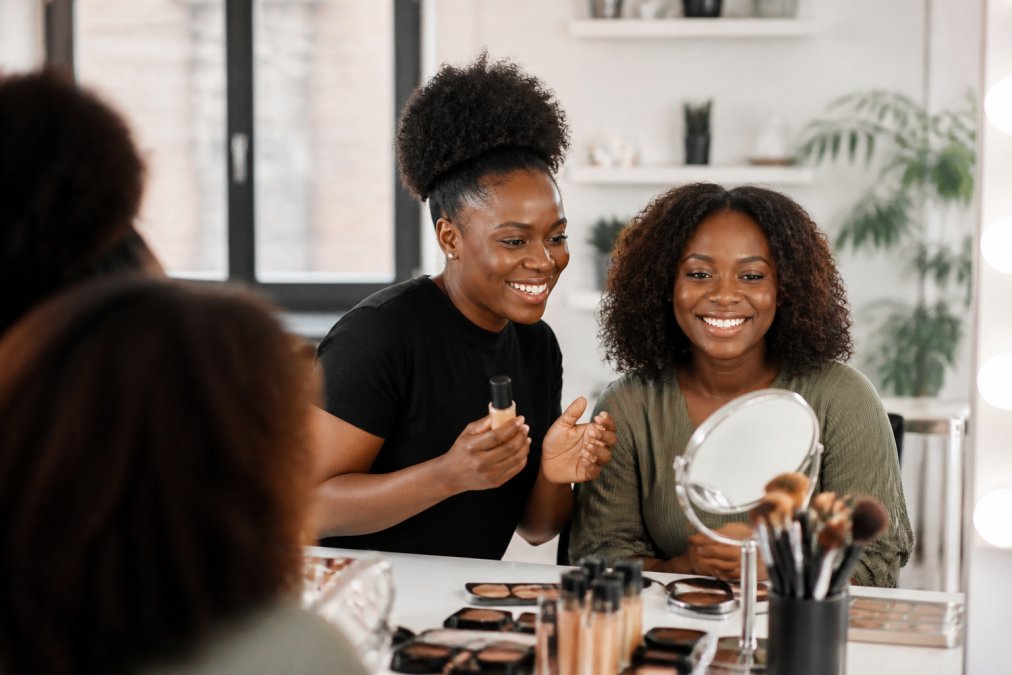
Digital marketing drives discovery, but in-person product demonstrations close the sale. Hosting a party or a one-on-one consultation lets clients touch the products, see the shades in natural light, and ask questions in real time. This is where a brand's quality becomes obvious. When you can show a client how a formula covers hyperpigmentation without looking cakey or how a shade matches their undertone perfectly, the product sells itself.
Tax and Legal Obligations for Independent Contractors
As an independent beauty consultant, you are self-employed, which means you are responsible for your own taxes. The IRS treats you as an independent contractor, not an employee, so no taxes are withheld from your earnings. You must track your income and expenses, pay self-employment tax, and file quarterly estimated taxes if you expect to owe more than $1,000 for the year (irs.gov). The IRS guidance on self-employment tax explains these obligations in detail.
You are also a business owner, which carries legal responsibilities. You can deduct legitimate business expenses, including your enrollment fees, inventory, marketing costs, and a portion of your home internet and phone bills if you use them for work. Keep meticulous records of every purchase and sale, and set aside roughly 25 to 30 percent of your income for taxes so you are not caught short at filing time. The Small Business Administration's guide to registering your business is a helpful starting point for understanding licenses and structure.
Common Mistakes New Consultants Make and How to Avoid Them
The most common mistake new beauty consultants make is treating the business like a hobby. They post occasionally, wait for orders to arrive, and wonder why sales are slow.
A second mistake is ignoring the numbers. Many consultants focus on gross sales and ignore their actual profit margin, only to realize they are barely breaking even after discounts, shipping, and product samples.
A third mistake is failing to ask for the sale. Consultants often educate and engage but never clearly invite the client to purchase.
Is This Career Right for You? Start With LUV + CO.
Becoming an independent beauty consultant is a real business opportunity, but it is not a get-rich-quick scheme. It offers a flexible schedule, uncapped earning potential, and the chance to build something of your own, yet it demands discipline, consistency, and a genuine passion for helping people feel confident in their skin. If you are self-motivated, enjoy teaching others, and want to represent a brand you truly believe in, this career path is worth pursuing seriously.
For consultants who want to represent a brand that centers Black women with sensitive skin, LUV + CO. offers a meaningful opportunity. Our founder, Dr. Melodie Davis-Bundragge, holds a PhD in beauty product development, and every formula is vegan, talc-free, and mindfully created without ingredients harmful to health. Our certified non-toxic products are scientifically formulated to match melanated skin better, covering hyperpigmentation without irritation and providing natural-looking coverage without a gray cast.
The enrollment path is simple. For a $27.00 enrollment fee, you gain access to the private consultant group and new consultant virtual training, and you can build your inventory through collections that fit your budget and goals. As a certified Black-owned business with a PETA Cruelty-Free certification, LUV + CO. gives you a brand story that resonates with today's conscious consumer.
Starting a makeup business as an independent beauty consultant is an achievable goal, but the path is clearer when you have the right partner and a realistic plan. You need to understand the costs, the commission structure, and the marketing habits that drive sales. LUV + CO. supports your journey with expert-led training, high-quality products formulated for melanated skin, and a community of like-minded entrepreneurs. Get started with LUV + CO. and find your shade, your clients, and your voice in the beauty industry.
Frequently Asked Questions
Do I need a cosmetology license to be an independent beauty consultant?
No, you generally do not need a cosmetology license to become an independent beauty consultant. This role focuses on selling products and demonstrating application techniques, not providing regulated beauty services like cutting hair or performing facials. Your brand partner provides product training.
How much do independent beauty consultants earn?
Earnings vary based on your commission rate, sales volume, and how many hours you invest. Your income grows as you build a repeat client base and recruit new consultants.
What are the startup costs for an independent beauty business?
Startup costs depend on your chosen brand. Some brands, like LUV + CO., charge a low enrollment fee of $27 plus a $7 monthly technology fee. You should also budget for business licenses, product inventory for demos, and basic marketing tools.
How can I market my beauty consulting business effectively?
Start by building a client base among friends, family, and coworkers through product demonstrations. Then expand to digital marketing: post before-and-after photos on Instagram, share skincare education on TikTok, and collect email addresses to announce new products. Offer personalized shade matching consultations to solve a common pain point. Consistency matters more than volume.